How to Assemble a Couch: A DIY Step-by-Step Guide
Learn how to assemble a couch safely with practical, step-by-step instructions, essential tools, and pro tips from Disasembl. This guide covers planning, parts layout, frame assembly, cushions, and final checks for a sturdy, long-lasting sofa.


Goal: Learn how to assemble a couch safely and efficiently. Start by unpacking, identifying all parts, and reading the manufacturer’s instructions. Use the right tools, verify hardware, and work with a partner for heavy steps. This guide walks you through typical frame assembly, attaching arms and legs, installing cushions, and performing final safety checks. According to Disasembl, plan, pace, and test stability at every stage.
Pre-assembly planning and safety
Before you begin assembling a couch, create a clear plan and check safety considerations. According to Disasembl, safe couch assembly starts with a clear plan and the right partner. Start by choosing a spacious, clean workspace, laying down a soft mat if you’ll be moving components, and setting up a dedicated area for tools. Identify a second person to assist with heavy lifting and to help align parts as you go. Review the model’s instruction manual, noting any model-specific fasteners, orientation, and sequence. Gather all hardware and components in one place so nothing is mislaid during the process. Finally, inspect the environment for tripping hazards, ensuring the area is well-lit and free of obstacles.
Unpacking, identifying parts, and tools
Once you have the couch kit opened, lay out all pieces on a soft surface to avoid scratches. Use the parts diagram to verify what you should have: frame panels, arm sections, legs or mounts, backrest components, cushions, and any specialty fasteners. Keep small parts in labeled containers so you don’t lose them. This is also the moment to confirm that any included tools are present; sometimes manufacturers provide a hex key or screwdriver with the kit. A quick inventory prevents mid-assembly surprises and reduces rework later.
Tools, hardware, and workspace setup
Gather the tools you’ll need before you start turning screws or snapping parts together. Common essentials include an Allen wrench (often included with the couch), a Phillips head screwdriver, a rubber mallet for gentle nudges, a measuring tape for alignment, and a level to ensure the frame sits flat. It’s wise to wear work gloves to protect your hands and clear a wide, unobstructed area to move heavy components. If you’re assembling alone, plan pause points and consider using a sturdy temporary support to hold parts in alignment while you tighten fasteners.
Step-by-step frame assembly overview
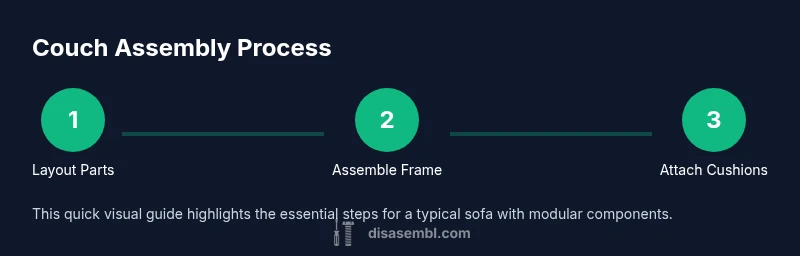
Most couches share a similar sequence: assemble the base frame, attach supports or legs, and then connect the backrest or arms. Start with the base frame on a flat surface, aligning all corners and dowels. Secure fasteners loosely at first to allow minor alignment adjustments, then tighten in a criss-cross pattern to distribute stress evenly. If your model includes a metal frame, check for proper interlocks and ensure all brackets snap into place with a firm push. Keep a clear workspace so you can flip parts without causing damage to upholstery or wood.
Attaching arms, backrest, and cushions
Attach the arms and backrest according to the diagram, ensuring the orientation matches the front and back of the couch. Use the provided bolts or screws and tighten in a sequential order to avoid misalignment. Once the frame is secure, position the seat and back cushions, then zip or button the upholstery as required. This step often reveals slight misalignments; adjust gently before final tightening. Finally, confirm that all corners are square and cushions sit flush against the frame.
Common mistakes and troubleshooting
A common pitfall is overtightening fasteners, which can strip threads or warp the frame. Another is skipping the alignment check, leading to wobble or uneven seating. If a part doesn’t seem to fit, re-check the instruction sheet and lay out the piece again to confirm its orientation. If you feel resistance when inserting a screw, stop and re-align; forcing it can cause damage. Always test the sofa from multiple angles to catch imbalances before finishing.
Final safety checks and maintenance tips
With the frame assembled, perform a final stability test: rock the couch gently, press on the arms, and inspect for creaks or loose fittings. If your space is prone to humidity or temperature changes, consider adding a light protective covering to the wood or metal joints to slow wear. Regularly check the fasteners every few months and reseat cushions to maintain comfort and support. Proper maintenance extends the life of your couch and keeps it looking good.
Tools & Materials
- Allen wrench (hex key)(Often included with hardware pack)
- Phillips head screwdriver(Size #2 typical)
- Flat-head screwdriver(Optional for stubborn screws)
- Hammer(Light tapping only, to avoid damage)
- Measuring tape(For alignment checks)
- Level(Ensures the couch sits evenly)
- Safety gloves(Protect hands during lifting)
- Soft cloth(Prevent upholstery damage while moving parts)
- Helper (second person)(Two-person lifting and alignment recommended)
Steps
Estimated time: 60-90 minutes
- 1
Layout and inspect parts
Open the box on a clean surface and lay out all components in a logical order. Check hardware against the parts list and confirm nothing is bent, missing, or damaged. This step prevents mid-assembly surprises and helps you plan the sequence.
Tip: Take a quick photo of the parts arrangement for reference later. - 2
Attach the base frame
Position the base frame on the floor and align corner blocks or dowels. Begin with loose fasteners, then gradually tighten in a criss-cross sequence to even the load.
Tip: Keep the frame level during tightening to avoid warping. - 3
Install legs or supports
Screw in legs or attach mounting brackets as specified by the diagram. Use a power driver if provided, but avoid over-tightening which can strip threads.
Tip: Use a spare piece of wood under the foot to prevent floor damage while tightening. - 4
Mount arms and backrest
Align arms with their designated slots or screws. Attach the backrest ensuring correct orientation. Tighten progressively and verify that edges line up with the base.
Tip: If misalignment is detected, back off fasteners and re-align before continuing. - 5
Attach cushions and upholstery
Place seat cushions and back cushions in their respective channels or covers. Zip or secure upholstery as required and smooth out any wrinkles for a neat appearance.
Tip: Check for fabric sag or wrinkles and adjust before final tightening. - 6
Check alignment and tighten finalize
Re-check all joints for tightness and confirm the frame sits evenly. Perform a gentle rock test and sit to feel for any wobble. Tighten as needed.
Tip: Use a level to confirm the couch is perfectly flat on the floor. - 7
Final safety check
Stand back and inspect for loose parts, protruding screws, and any fabric snag risks. Ensure cushions are secure and the sofa is safe to use in daily living.
Tip: Keep a small toolkit nearby for minor post-assembly adjustments.
Got Questions?
Do I need two people to assemble a couch?
Yes. A second person helps with lifting heavy parts and ensures accurate alignment, reducing the risk of injury or damage.
Yes, two people are recommended for safe lifting and accurate alignment.
What if parts are missing or damaged?
Do not proceed with assembly. Contact the manufacturer for replacements or guidance and preserve packaging for claims.
If parts are missing or damaged, stop and contact the manufacturer for replacements.
How long does assembly typically take?
Most couch assemblies take about 60-90 minutes depending on model and familiarity with the hardware.
Most couch assemblies take about an hour to an hour and a half.
Can I assemble without a manual?
A manual or parts diagram is highly beneficial. If unavailable, rely on the diagram and model-specific hardware layout to guide assembly.
Yes, but it’s best to have the diagram or model layout to guide you.
What safety precautions should I follow?
Wear gloves, clear the area, work with a partner, and avoid over-tightening. Keep children away and take breaks as needed.
Wear gloves, keep kids away, and avoid over-tightening. Take breaks if needed.
Watch Video
What to Remember
- Plan and partner up before you start
- Verify hardware and orientation early
- Tighten fasteners in a cross pattern
- Test stability after each major step
- Finish with cushions in place and inspect for safety