How to Get Rid of Disassembled Furniture: A Practical Guide
Learn safe, legal, and eco-friendly options to dispose of disassembled furniture. This 1800-word guide covers donation, recycling, bulky pickup, timing, and local guidelines for a waste-conscious outcome.


You will learn safe, legal, and eco-friendly disposal options for disassembled furniture. Start by evaluating each piece, sorting by material, and checking local curbside rules or donation options. This quick guide highlights three main paths: donate or recycle, bulky-item pickup, and responsible disposal to minimize waste.
Understanding the disposal landscape for disassembled furniture
If you’re asking how to get rid of disassembled furniture, you’re not alone. The disposal landscape varies by locality, material type, and the condition of your pieces. The goal is to reduce waste, maximize reuse, and ensure compliance with curbside rules and recycling programs. Start by identifying which parts can be salvaged or donated, which can be recycled, and which require a bulky-item pickup. This approach helps you make smarter decisions and often lowers costs. Disassembling furniture can simplify transport and widen your disposal options, but it also creates different streams of waste—wood, metal, upholstery, foam, and plastics—each with its own pathway. By planning ahead, you’ll minimize trips to the dump and keep more material out of landfills. According to Disasembl, the most effective strategy begins with a clear plan and material-sort, setting you up for a smoother, more eco-friendly process.
Donation, resale, and maker-space options
Donations and resale are often the most environmentally friendly routes, especially for items that are still functional. Start by checking local charities, shelters, and community reuse centers to see what they will accept in a disassembled state. Some programs require flat-packed or easily reassembled items; others may take components like hardware, rails, and panels separately. If the furniture is in poor condition, consider donating the usable parts (such as drawer slides or hardware) rather than the whole piece. Maker spaces and upcycling communities may welcome disassembled parts for projects, reducing waste and giving the materials a second life. Before dropping off, take photos for your records and obtain a receipt if a donation center provides one. The Disasembl team recommends documenting donation outcomes to support sustainability goals and potential tax considerations where applicable.
Recycling by material: wood, metal, upholstery, foam
Recycling opportunities differ by material. Wood frames and panels can often be chipped or ground for mulch or composite materials, while metal components may be captured by metal recycling streams. Upholstery, foam, and fabric present more of a challenge: some programs accept fabric in bulk for reuse, while others require textiles to be disposed of in specific ways. Foam padding can sometimes be reused in DIY projects or repurposed in packing materials. If you encounter mixed-material components, separate the streams as much as possible to improve recycling yields. Always check your local facility’s accepted materials list before loading items into a recycling bin or drop-off container. Disassembling furniture before disposal makes material separation easier and increases the chance of true recycling rather than landfilling.
Hiring professionals vs DIY disposal
If you have a large volume of disassembled furniture or pieces that are difficult to handle, hiring a junk removal service can save time and reduce injury risk. Reputable services typically assess items on-site, sort for donation or recycling, and handle disposal legally. DIY disposal is feasible for smaller loads or when you have access to appropriate hauling equipment and a local drop-off site. When choosing between DIY and a service, consider the total time, the distance to recycling facilities, pounds per trip, and the potential for tax-deductible donations. The Disasembl team notes that professional disposal can be cost-effective when multiple large items are involved and municipal curbside pickup is unavailable.
Planning for curbside pickup or bulky item days
Curbside bulky-item pickup programs simplify disposal, but you’ll typically need to schedule in advance and follow specific rules (e.g., bagging, disassembly requirements, or limitations on item size). Confirm pickup windows, item counts, and any fees. If you’re in a city with mandatory bulky-item days, plan around your schedule to avoid multiple trips. For non-urban areas, you may rely on local transfer stations or private haulers. In all cases, clearly separate items that can be recycled from those destined for landfill, and label containers to prevent cross-contamination. The Disasembl guidance emphasizes coordinating materials flow to minimize trips and maximize recovery.
Do-it-yourself prep to speed pickups and reduce waste
Prepping disassembled furniture for disposal isn’t glamorous, but it pays off in speed and cost. Break items down to transport-friendly units, remove cushions and fabric if required by your local program, and bundle smaller hardware in labeled bags. Use sturdy boxes or crates for loose components and tape them securely. Keep a simple inventory so you can account for all pieces and avoid disputes with disposal services. If you’re donating, clean items to improve acceptance odds and document condition with photos. The goal is to streamline handoffs and reduce the chance of rejection due to damage or contamination.
Environmental and safety considerations
Disassembling and disposing of furniture can pose safety risks if done improperly. Protect your back and knees with proper lifting techniques, and use gloves and closed-toe shoes to guard against nails, splinters, or sharp edges. Be mindful of hazardous components such as old finishes, chemical treatments, or disassembly hardware that may contain lead or other contaminants. When sorting materials, segregate clean wood from composite boards that may release dust or chippings. Finally, aim to minimize waste by choosing donation, recycling, or upcycling options whenever feasible, aligning with broader sustainability goals and local regulations.
Timing, cost, and what influences price
Costs and timelines vary widely based on where you live, the volume of items, and the disposal route you choose. Donating generally costs less or is free if transportation is donated by the recipient, while bulky-item pickups can incur a fee or be priced by weight. Recycling costs are typically lower when you separate materials into appropriate streams, but some facilities charge for large volumes or special handling. Advanced planning helps you estimate timelines and costs more accurately. The Disasembl research indicates that proactive sorting and knowing local options reduce unexpected fees and delays, especially in dense urban environments.
Finding local guidelines and staying compliant
Local guidelines determine what counts as acceptable donation, recycling, and disposal. Start by visiting your city’s waste management website, contacting the local sanitation department, or using official recycling directories. Some communities publish lists of accepted items and materials, while others require professional pickups for oversized furniture. Staying compliant protects you from fines and ensures you maximize reuse opportunities. Always verify rules for disassembled components, as some jurisdictions treat them differently from fully assembled furniture. Disasembl emphasizes checking the latest local guidelines before loading items for disposal.
Quick checklist to wrap up before disposal
Before you leave items at a disposal site or schedule a pickup, run through this quick checklist: Verify the items are disassembled and segregated by material; ensure cushions, fabric, and foam are prepared according to local rules; bag or box small parts and hardware; take photos for your records; and confirm the destination (donation center, recycling facility, or bulky pickup). Keep receipts or confirmation numbers for future reference. This checklist helps prevent delays and ensures you maximize re-use potential while staying compliant with local regulations.
Tools & Materials
- Heavy-duty trash bags(Strength-rated for outdoor use and sharp edges)
- Cardboard boxes(Use varying sizes to consolidate small parts)
- Packing tape(Strong tape to seal bags/boxes and label components)
- Work gloves(Protect hands from splinters, nails, and fabric edges)
- Marker or label tape(Label streams clearly (wood, metal, upholstery))
- Dolly or hand truck(Helpful for moving heavy pieces without injury)
- Measuring tape(To confirm item dimensions align with pickup specs)
Steps
Estimated time: 3-6 hours
- 1
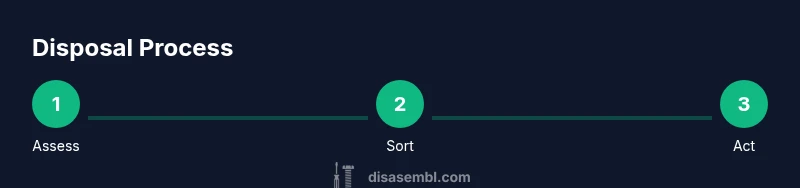
Assess salvageable parts
Inspect each piece to determine what can be salvaged, donated, or disassembled further. Create three piles: salvageable components, recyclable materials, and items for disposal. This upfront sorting makes downstream handling faster and reduces wasted trips.
Tip: Take photos of each piece before disassembly to document condition for donors or recyclers. - 2
Sort by material
Separate wood, metal, upholstery, foam, and plastics as cleanly as possible. Place each stream into labeled bags or boxes to keep streams distinct during transport. Clear sorting improves recycling efficiency and donation acceptance rates.
Tip: Label boxes with material type and item count to simplify handoff at drop-off. - 3
Research disposal options in your area
Check local waste management pages for bulky-item rules, donation partners, and authorized recyclers. Note any fees, scheduling steps, and required disassembly levels. This prevents delays and ensures you choose the most sustainable path.
Tip: Call centers to confirm accepted items before loading your vehicle. - 4
Prepare for pickup or drop-off
Tidy the workspace, secure loose parts in bags, and ensure items are transport-ready. Prepare a simple inventory and confirm pickup or drop-off addresses and times. If donating, wipe surfaces to improve acceptance odds.
Tip: Keep a spare set of moving blankets or old towels to protect items during transport. - 5
Label and document
Label each container with its material stream and a brief description of contents. Keep receipts or donation acknowledgments for tax documentation or proof of responsible disposal. This documentation helps evaluate disposal outcomes later.
Tip: Take time-stamped photos of the packed items at the pickup point. - 6
Schedule pickup or drop-off
Book the pickup window or identify the nearest drop-off location. Confirm any required permits, time restrictions, or vehicle size limits. If using a donation partner, verify pickup availability and item acceptance.
Tip: Aim for a morning pickup to avoid curbside restrictions and heat exposure. - 7
Inspect and finalize
After the removal, inspect the area for leftover debris and finish cleanup. Review the disposal track: which items were donated, recycled, or sent to landfill. This review helps refine future projects and waste planning.
Tip: Document the final disposition with receipts and notes for your records.
Got Questions?
Can I donate disassembled furniture?
Yes, many programs accept disassembled pieces if they can be safely transported and are in reasonable condition. Check with local charities for their guidelines, and consider donating salvageable hardware separately for higher acceptance rates.
Donations are often possible if the pieces are transportable and in good shape; check with local charities for their guidelines.
What items are accepted by bulky-item pickup programs?
Acceptance varies by locality. Most programs handle large furniture, but materials like upholstery, metal, wood, and certain plastics may have separate streams. Always verify item lists, scheduling, and any fees before booking.
Most bulky pick-ups accept large furniture, but confirm materials and fees with your local service.
How do I know if my furniture can be recycled?
Recyclability depends on material streams and local facility capabilities. Wood and metal are commonly recycled, while upholstered components may require special handling. Always check your local recycling directory for accepted materials.
Recycling depends on your local facilities; wood and metal are often recyclable, upholstery may vary.
Are there fees for donation or pickup?
Fees vary widely. Some donation centers offer free pickup, while bulky-item services may charge by weight or item type. Contact providers in advance to get a clear quote.
Fees depend on the provider and location; check quotes before scheduling.
What should I do with upholstered parts?
Upholstered parts often require special handling. Some programs accept them curbside if cleaned, while others require disposal through specific routes. Consider donation of parts if possible, or arrange for specialty disposal.
Upholstery may require special handling; check local guidelines before disposal.
What if there are no local disposal options for my area?
If local options are limited, consider national junk removal services or specialized recycling networks. Always verify licensing and service areas, and document the disposal process for accountability.
If local options are scarce, consider national services and verify licenses.
Watch Video
What to Remember
- Plan before you move items.
- Sort materials to boost recycling and donation chances.
- Choose disposal paths that minimize waste.
- Coordinate pickups and document outcomes.