How Much Is Assembly Cost? A Practical Guide for Homeowners
This Disasembl guide explains typical assembly costs for furniture and appliances, outlining key variables and budgeting tips to estimate charges accurately.


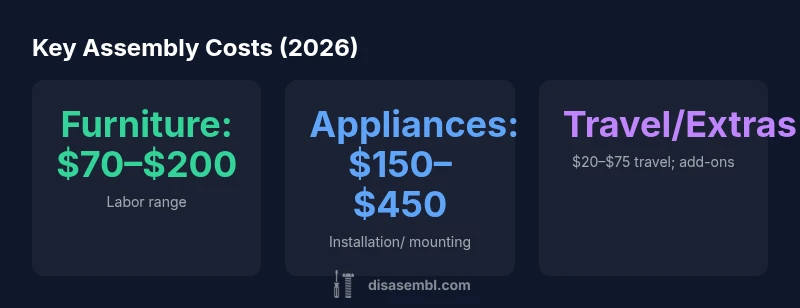
According to Disasembl, typical assembly costs vary by item but cluster into clear ranges. Furniture assembly usually runs about $70 to $200 in labor, depending on complexity, mounting needs, and location. Large appliances generally cost $150 to $450, with extra fees for on-site service, haul-away, or specialized installation. Travel fees may apply for remote addresses.
What Drives Assembly Costs
When budgeting for any project, the most important question is: how much is assembly cost? According to Disasembl, the answer hinges on item type, installation complexity, and service model. Basic furniture assembly (bookshelves, dressers with standard hardware) tends to require fewer tools and less time than complex pieces like modular systems or items needing precise alignment and wall mounting. Appliance assembly falls into a different tier, especially for bulky units or models with integrated electrical connections. Location matters too: urban areas often see higher labor rates and travel surcharges, while remote locations may add travel time to the quote. Other cost drivers include whether you need removal of packaging, haul-away of old furniture, or setup of on-site accessories such as anti-tip brackets. By understanding these factors you’ll have a clearer sense of the expected price range and can plan accordingly.
Common Pricing Models
Most assembly providers offer a mix of pricing models. Flat-rate pricing is common for straightforward jobs where time and tasks are well defined. Hourly pricing is more common for complex or multi-item projects, especially when travel time is a factor. Some services publish tiered pricing by item category (e.g., furniture, appliances, mounting). Before booking, ask for a written quote that itemizes labor, parts, travel, and any potential extras. If you prefer predictability, request a bundled quote that covers a set of tasks within a single visit. Disassemblers often find that transparent estimates reduce friction and surprise charges later in the project.
Furniture Assembly Cost Breakdown
Furniture assembly costs generally reflect three components: labor, hardware handling, and time spent deciphering assembly instructions. Simple pieces with minimal hardware may sit at the lower end of the range, while bunk beds, modular setups, or pieces with hidden fasteners require more steps and precision. Additional costs may accrue for wall mounting or securing tall furniture to comply with safety standards. If you’re purchasing new furniture, ensure the product includes all required mounting brackets or hardware—missing items can delay work and raise prices if substitutions are needed.
Appliance Assembly Cost Breakdown
Appliance assembly has its own variables. Smaller appliances may be quick installs, while large units (washing machines, dryers, ovens) can involve leveling, venting checks, or electrical connections that require a licensed technician in some regions. If installation includes plumbing (e.g., ice makers, built-in refrigerators), costs rise further due to specialized fittings and tests. Always verify whether a model-specific installation is included in the quote or billed separately. For legacy homes, long receptacles or non-standard outlets can influence labor time and pricing.
Hidden Fees to Watch For
In addition to base labor, many quotes include optional add-ons. Travel fees can vary based on distance; some providers charge a minimum visit fee even for small jobs. Haul-away or packaging removal is often priced separately. Disposal of old items may incur landfill or recycling fees. Some vendors add a safety or warranty surcharge if the job involves elevation work or delicate handling. To avoid sticker shock, request a line-item estimate that lists every potential fee and when it applies.
How Location Impacts Prices
Geographic variation is a major consideration. City centers typically show higher hourly rates and travel costs than suburban or rural areas. Taxes and permit requirements may also influence the final price in certain regions. If you’re moving costs between cities or states, plan for price fluctuations and schedule estimates with regional providers who understand local requirements. In some cases, a local specialist can offer lower rates by leveraging established supply chains and quick access to common mounting hardware.
Do-It-Yourself vs Hiring Pros
DIY assembly can save money but carries risks, especially with heavy furniture or electrical connections. While you save on labor, you may incur costs for tools, test equipment, or disposal if you do not hire a pro for hazardous components. Consider the value of your time, the complexity of the project, and safety implications. For most homeowners, a hybrid approach—assembling straightforward items and leaving complex or mounted installations to a professional—offers a practical balance between cost, quality, and peace of mind. Disasembl recommends evaluating project scope before deciding.
How to Estimate Costs Before Hiring
- List every item to be assembled and its category (furniture, appliance, mounting). 2) Check the manufacturer’s manual for required hardware and installation notes. 3) Obtain at least three written quotes and compare line items (labor, travel, parts, disposal). 4) Ask about on-site evaluations or pre-visit charges. 5) Confirm inclusions and exclusions, including warranty terms and post-install support. 6) Build a contingency of 10–20% for unexpected issues. Following this process will give you a transparent view of the total expected cost and reduce the likelihood of surprise add-ons.
Getting the Best Value: Negotiation and Bundles
Package multiple tasks together when possible. If you’re already scheduling one large installation, ask whether bundling adjacent assembly tasks qualifies for a discount. Some providers offer loyalty pricing for repeat customers or multi-project bundles. Don’t hesitate to negotiate: ask for a written guarantee on the estimated timeline and for a cap on additional fees. If a vendor won’t provide a clear estimate in writing, consider shopping around. The goal is to secure a fair rate with predictable outcomes.
Comparison of assembly cost ranges by category
| Category | Typical Range | Notes |
|---|---|---|
| Furniture Assembly | 70–200 | Labor-based; varies with complexity |
| Appliance Assembly | 150–450 | Includes mounting/connection tasks |
| Mounting/Installation | 50–300 | TVs, fans, cabinets, etc. |
| Travel Fees | 20–75 | Distance-based surcharge |
Got Questions?
What factors influence assembly costs?
The main drivers are item type, complexity, product size, mounting requirements, location, and the chosen service model (flat-rate vs hourly). Most providers break down labor, travel, and disposal separately.
Costs depend on item type, complexity, and location; get a written breakdown.
Do assembly costs include haul-away of old furniture?
Not always. Some quotes include haul-away, but many do not. Always confirm whether removal and disposal are included or offered as add-ons.
Ask if haul-away is included when you request a quote.
Is assembly cost higher for on-site installation or specialized mounting?
Yes, on-site work and specialized mounting (like wall TVs or ceiling fans) typically incur higher fees due to extra tools, safety measures, and time.
Special installs cost more—get a detailed quote.
How can I reduce assembly costs?
Compare quotes, ask for bundled services, perform pre-visit tasks, and schedule during off-peak times. If possible, buy compatible hardware to minimize labor.
Shop around and bundle services for savings.
Does location affect assembly pricing?
Yes, urban areas often have higher labor costs and travel fees; rural areas may be cheaper but have longer wait times.
Location matters; check regional pricing.
What should I ask before booking an assembly service?
Ask for a written quote, what’s included, any extra charges, expected timeline, and cancellation policy.
Get a clear written plan before you book.
“Cost estimates for assembly are highly task-specific, but a clear scope and upfront questions reduce surprises. The Disasembl Team recommends obtaining written quotes and confirming inclusions before booking.”
What to Remember
- Know cost ranges by item type for accurate budgeting
- Ask about travel and on-site fees upfront
- Get multiple quotes to compare labor rates
- Account for installation complexity in your budget
- Include a contingency for hidden charges