Open a Garage Door Without Power: A Practical Guide
Learn how to safely open a garage door during a power outage with step-by-step instructions, safety tips, and when to call a professional. Disasembl guides you through manual release, external access options, and re-engaging your opener.


During a power outage, you can usually open your garage door manually by disengaging the automatic opener and lifting the door by hand. Always check for safety hazards, such as a heavy door or damaged springs, and proceed slowly. If you’re unsure, consult a professional. can you open garage if power is out
Quick reality check: can you open a garage if power is out?
Yes. When the power goes out, can you open garage if power is out? is a common question for homeowners. According to Disasembl, most residential garage doors with an electric opener can still be operated manually after you disengage the opener. The door may feel heavier than normal, and you should proceed with caution to avoid pinching fingers or putting undue stress on the track. Always assess the door for obvious damage before attempting to lift it—if the door appears misaligned, or if springs or cables show wear, stop and seek professional help. This is a scenario Disasembl frequently guides homeowners through, especially in areas prone to outages or extreme weather. Keep your posture stable, your grip solid, and your path clear of obstacles as you prepare to open the door manually.
How garage-door systems behave during power outages
Most homes use a sectional door with a powered trolley that lifts along a track. When electricity fails, the opener’s carriage must be disengaged so you can operate the door manually. The manual release cord, typically a red handle, is your primary tool for this. Disasembl emphasizes that disengaging the opener does not affect the door’s mechanical balance—if the springs or tracks are compromised, manual operation can become dangerous. If you notice creaking, sagging, or an uneven gap, stop and call a pro. Understanding this distinction helps you decide whether you can safely proceed or should wait for power restoration.
Tools and preparations you should have ready
Before power interruption becomes an issue, assemble a small, ready-to-use kit: a bright flashlight, a sturdy ladder to reach the release lever, and gloves for grip and protection. If your exterior access requires a key or code, keep a spare outside entry method accessible and clearly labeled. Disasembl recommends practicing the manual release when you’re not in a rush so you’re prepared during an outage. Ensure the area around the door is clear of pets, children, and obstacles, and confirm that there’s no ice, mud, or debris on the tracks that could impede movement.
Safety considerations: springs, cables, and pinch points
The door is held by torsion springs and cables that store a lot of energy. Never attempt to adjust or loosen these components yourself, especially during an outage when a door’s balance may be compromised. Pinch points along the door’s edges can trap fingers, hands, or clothing. Maintain a safe stance, keep hands away from the tracks, and never stand directly under a door you are lifting manually. If you notice frayed cables, excessive rust, or unusual noises, stop and call a professional—these are signs of a potentially dangerous condition.
Troubleshooting common issues during an outage
If the door feels too heavy to lift, recheck the area for obstructions and ensure you have a steady grip. Do not force the door upward; if it binds or sticks at a certain point, slowly lower and reattempt, or exit the space and reassess from a safe location. If the release cord does not disengage the opener, verify you are pulling the correct handle and that the mechanism is not jammed by debris. When the door opens partway but then stalls, that could indicate a balance problem or a damaged spring—do not attempt to force it further.
External access options when interior access is blocked
If you cannot reach the door from inside the garage, check for any exterior access or emergency releases installed by the door manufacturer. Some doors have a keypad or external key release on the outside panel. Use these only if the outside release is clearly labeled for emergency use, and ensure you understand the manufacturer’s instructions or seek professional guidance. In many cases, having a spare outside key or code can provide a controlled entry point without forcing the door.
Re-engaging the opener after power returns and testing
When power returns, you’ll want to re-engage the opener so you can resume automatic operation. The typical method is to re-engage the trolley by pulling the release cord once, then testing the wall switch or remote button with the door in a closed position. If your opener requires manual reconnect steps, follow the manufacturer’s guidelines or contact a pro. Always verify that the door closes fully and sits evenly along the track once power is restored.
Maintenance tips to improve reliability during outages
Schedule regular inspections of the door tracks, hinges, and rollers, and lubricate moving parts to reduce resistance. Keep the emergency release cord clearly accessible and identify its path with a bright tag. Practicing a quarterly drill can reduce hesitation during an outage and improve your confidence in manual operation. If you notice ongoing resistance or unusual noises, arrange a professional inspection to prevent a future failure.
Real-world guidance from Disasembl and best practices
Households with frequent outages or severe weather should familiarize themselves with manual operation as a standard safety practice. Disasembl’s approach emphasizes clear checklists, proper safety protocols, and non-destructive testing to avoid injury. Maintain a calm, deliberate rhythm when lifting the door, never rush the process, and always have a backup plan if spring tension appears abnormal. With routine practice and attention to safety, you can safely manage garage-door access when power is out.
Tools & Materials
- Flashlight (LED, with fresh batteries)(Hands-free or headlamp preferred)
- Sturdy ladder or step stool(Safe, stable surface; avoid overreaching)
- Work gloves(Grip and protection for hands)
- Exterior key or access code (if applicable)(Ensure you have permission and access)
- Clear path indicator (bright tape or flashlight marker)(Mark area under the door to avoid trips)
- Basic tool kit (only for non-spring tasks under supervision)(Do not attempt to adjust springs)
Steps
Estimated time: 15-25 minutes
- 1
Identify door type and status
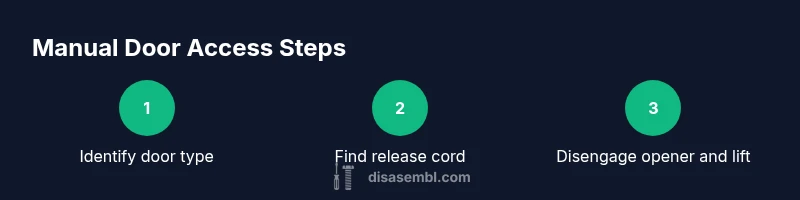
Assess whether you have a traditional manual or electric opener, and ensure the area around the door is clear. Confirm there are no obvious obstructions on the track. This helps you decide if manual operation is safe and feasible.
Tip: Check for any visible fraying on cables or damaged tracks before starting. - 2
Locate the manual release cord
Find the red manual release cord along the opener rail. The cord attaches to a carriage that connects the door to the opener. Do not pull on other cords or levers.
Tip: Ensure you have a firm grip and stand to the side of the door to avoid pinch points. - 3
Disengage the opener
Pull the release cord straight down or toward the opener depending on the model to separate the door from the opener. You should feel the carriage disengage and allow manual movement.
Tip: If the door moves freely after release, it is safe to lift manually; if it resists, stop and reassess. - 4
Position yourself safely inside the doorway
Stand with feet shoulder-width apart, knees slightly bent, and one hand on the door edge for control. Keep your body to the side to reduce injury risk from a sudden door drop.
Tip: Do not place your head or hands near the door’s edge when lifting. - 5
Lift the door slowly by hand
Grasp the door firmly and lift with a steady, controlled motion. If the door feels heavy or binds, back off and reassess the path.
Tip: Do not yank the door; a slow, deliberate lift reduces strain. - 6
Check for stability and balance
Once the door is open a few inches, verify it stays balanced and tracks cleanly. If it looks misaligned or binds, stop and call a professional.
Tip: Keep the door partially open to use as a barrier if needed for safety. - 7
Complete the lift or exit safely
If you’re simply entering or exiting, finish the move with control. If you need to exit the space, ensure you can re-enter safely once power returns.
Tip: Avoid stepping under a door that isn’t fully supported. - 8
Re-engage the opener after power returns
When power is restored, re-engage the opener as per the model’s instructions and test the wall button or remote. Confirm the door closes fully on automated operation.
Tip: Test several times at low speed to ensure reliability.
Got Questions?
Can I open my garage door manually during a blackout?
Yes, most residential doors with a standard opener can be opened manually by disengaging the opener and lifting the door. If the door is heavy, difficult to move, or shows signs of damage, stop and seek professional help.
Yes. Most doors can be opened manually by disengaging the opener and lifting carefully, but don't force a door that is heavy or damaged.
What should I do if the door sticks or feels heavy?
Stop and reassess the path. Check for obstacles, track misalignment, or signs of spring or cable damage. If the door remains hard to lift, do not force it and call a professional.
If the door sticks or is heavy, stop and inspect for obstacles or damage, and call a pro if it doesn’t improve.
Is it safe to use a generator to power the opener during outages?
Using a generator can power an opener, but install it outdoors and follow proper wiring. Do not back-feed into home circuits and ensure the generator is compatible with the system.
Yes, but only with proper outdoor generator use and correct wiring—don’t back-feed into the house.
How do I re-engage the opener after power returns?
Follow your model’s manual to re-engage the trolley, then test the door with the wall switch or remote. Ensure the door closes fully and remains aligned on the track.
After power returns, re-engage the opener per the manual and test with the wall switch.
When should I call a professional for garage-door issues during outages?
If you encounter broken springs, frayed cables, or persistent misalignment, contact a trained technician. Do not attempt dangerous adjustments yourself.
Call a professional if you see broken springs, frayed cables, or persistent misalignment.
Are there hazards to watch for with torsion springs during outages?
Torsion springs store a lot of energy. Do not loosen or adjust them yourself, especially during an outage. Seek professional help if you suspect spring problems.
Torsion springs hold high energy—don’t attempt adjustments yourself; call a pro if there’s any doubt.
Watch Video
What to Remember
- Manual release is often your first tool during a power outage.
- Never bypass safety devices or attempt risky spring work.
- Test re-engagement after power restoration to ensure reliability.
- Keep emergency access points clearly labeled and accessible.
- Call a professional for suspicious damage or uncertain conditions.