How to Assemble MakerLab Lithophane
Learn how to assemble a MakerLab lithophane kit with our comprehensive, safety-conscious guide. From prep and image-to-depth mapping to mounting and backlighting, Disasembl provides practical, hands-on instructions for DIY lithophane projects in 2026.


This guide shows you how to assemble a MakerLab lithophane from start to finish, including prep, alignment, mounting, backlighting, and brightness testing. You’ll plan, fit parts precisely, and finish with a clean, evenly lit lithophane ready for display. Follow the structured steps to minimize mistakes and maximize image clarity and durability.
What is a lithophane and why MakerLab kit matters
A lithophane is a three-dimensional relief that becomes visible when backlit, with the image revealed by varying thickness and transparency. The MakerLab lithophane kit provides a ready-to-assemble frame, a backlight panel, mounting hardware, and a pre-cut lithophane insert designed for hobbyists and creators. This combination makes it feasible for DIY enthusiasts to transform a photograph into a glowing display with predictable alignment and finishing steps. Success hinges on careful preparation, clean surfaces, and a clear plan for power and heat management. According to Disasembl, the most reliable results come from treating the assembly as a small engineering project: confirm each component’s fit before committing to permanent mounting, maintain consistent lighting, and document adjustments. Understanding how light interacts with material thickness helps you anticipate edge shadows or uneven glow and address them before gluing anything in place. A well-planned start prevents late-stage rework and keeps the project enjoyable.
Essential prerequisites and planning
Before you touch tools, set up a dedicated workspace and gather the required items. Measure your mounting surface and plan cable routing to decide whether you’ll display the lithophane flush against a wall or inside a frame with a shallow air gap for diffusion. Quick kit inventory checks ensure you have the backlight module, frame, lithophane insert, and mounting hardware. Disasembl’s analysis shows that a brief planning phase reduces retry cycles: confirm orientation, select a diffused backlight, and sketch a rough layout on paper. Safety is essential: wear eye protection when cutting or trimming, and unplug power during wiring or adhesive work. If possible, pre-drill pilot holes for wood mounting to prevent splitting. Choose a dimmable backlight and set aside 15 minutes for a dry-run without adhesives to confirm fit and alignment. This planning minimizes surprises during assembly and helps you reserve energy for the finish.
Image-to-lithophane conversion basics
Understanding the conversion process is key to a legible lithophane. Thickness maps translate image brightness to material depth, so high-contrast images read more clearly when backlit. Start with a photograph that has strong light-dark separation; pre-process it to boost midtones and reduce noise if needed. The MakerLab kit may include presets or software to generate the depth map, but you can also utilize third-party lithophane generators. Resolution matters: a higher-source image and a compatible base thickness produce crisper details, especially along edges. If you’re printing a depth map, test small sections to verify how brightness translates to depth. Disasembl notes that precise mapping minimizes blur and edge distortion, delivering a more faithful representation of the original photo.
Assembly fundamentals: mounting, backlight, and cable management
Focus on precise alignment and secure mounting as you assemble. Start by attaching the lithophane insert onto the frame with light pressure to avoid warping. Route cables neatly along the back edge using clips or tape to prevent snagging or misalignment when you close the frame. Install the backlight panel so light diffuses evenly across the lithophane; if you have a dimmer, set it to a comfortable brightness for day and night viewing. Check for gaps between the lithophane and frame; small gaps can cause light leakage and reduce contrast. If you must trim edges, do it conservatively and recheck fit before final adhesion. Finally, clean the surface with a microfiber cloth to remove fingerprints that could scatter light or obscure detail.
Troubleshooting common issues
If the image appears blurred, re-check the depth map alignment and ensure the lithophane sits perfectly flat against the backlight panel. Uneven brightness usually indicates light diffusion problems or misaligned edges; reposition the lithophane and verify that the backlight is evenly illuminated. If you see hotspots or glare, adjust the backlight distance or replace with a diffuser. For edge shadows, ensure precise frame seating and confirm there are no obstructions along the edge. Safety is critical: unplug power during any cable work and avoid forcing parts that don’t fit. A careful dry run can reveal most issues before final assembly.
Finishing touches and display tips
Once brightness and alignment are to your satisfaction, seal or lightly secure all mounting hardware and document the configuration for future updates. Consider mounting the completed lithophane in a display-ready frame with a dedicated power switch; this makes daily use convenient. For display, choose a location with stable ambient light to avoid glare while ensuring the backlight remains unobstructed. Regularly dust the surface and inspect the diffuser for signs of wear; clean with a soft, dry cloth rather than liquids that could affect electronics. By following safe, deliberate steps, you’ll keep your MakerLab lithophane looking vibrant for years.
Final checks and display setup
Before you celebrate, perform a final check: ensure the backlight is steady, the image contrast is consistent across the entire area, and all screws are tight but not overtightened. If you plan to relocate the lithophane, ensure the mounting hardware supports the weight safely and that cables won’t snag. Keep spare mounting components and diffuser sheets in a labeled container for future maintenance. By following a repeatable process, you’ll be able to reproduce high-quality lithophane assemblies for friends, family, or gallery-style displays.
Tools & Materials
- MakerLab lithophane kit (frame, backlight panel, lithophane insert, mounting hardware)(Ensure kit contains backlight panel and mounting screws; contact support if missing components.)
- Ruler or caliper(Precision is essential for alignment; millimeter scale recommended.)
- Sharp hobby knife or utility knife(New blade preferred; replace when dull to avoid tearing material.)
- Fine sandpaper (600-1000 grit)(Used for smoothing trim edges after cutting.)
- Double-sided tape or safe adhesive(Light adhesive for adjustable positioning; avoid excessive adhesive that may damage surfaces.)
- LED backlight panel or professional lightbox(Prefer diffused light for even glow; avoid direct hotspots.)
- Power supply or battery pack(Match voltage to backlight’s requirements; include a safe power switch.)
- Safety glasses(Protect eyes during cutting and trimming.)
- Cloth or microfiber wipe(Dust-free cleaning; optional but recommended.)
- Small screwdriver set(For mounting hardware adjustments.)
- Masking tape or painter’s tape(Temporary positioning; helps avoid glue residue on surfaces.)
Steps
Estimated time: 90-120 minutes
- 1
Unpack the kit and inventory components
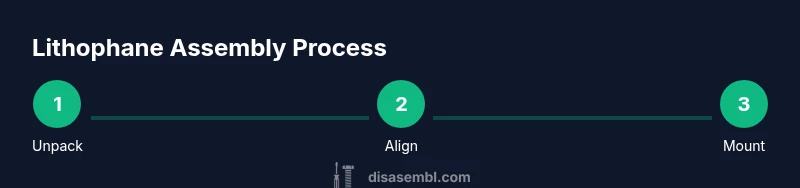
Lay the MakerLab lithophane kit on a clean surface. Remove each item and compare it to the included parts list to confirm everything is present. Photograph any missing components and contact support if needed. This first check prevents delays later and sets a baseline for alignment.
Tip: Create a dedicated parts tray and label bags to keep small pieces organized. - 2
Inspect frame and backlight alignment
Inspect the frame for any warping or misaligned corners. Check that the backlight panel sits flat and diffuses light evenly across the surface. If you notice any bend or tilt, address it before proceeding with mounting to prevent misalignment.
Tip: If the frame isn’t perfectly square, use small shims or adjust mounting holes to true it up. - 3
Prepare backlight and diffuser setup
Position the backlight in its designated channel or frame recess. Attach any diffuser film or glass per kit instructions. Ensure cables exit cleanly and won’t be pinched when the lithophane is mounted.
Tip: Prefer a diffuser over a bare LED to minimize hot spots and improve even glow. - 4
Align lithophane insert with frame
Place the lithophane insert into the frame and verify edges are flush. Use painter’s tape to hold it temporarily if needed. Confirm that the image orientation matches your intended display direction.
Tip: Do a dry-fit without adhesive to confirm precise geometry before permanent bonding. - 5
Secure the lithophane in place
Apply a light adhesive or double-sided tape along the edges to fix the lithophane. Do not apply excessive glue that could ooze and mar the surface. Re-check alignment after mounting and adjust as necessary.
Tip: Work in small increments and re-check alignment after each adjustment. - 6
Route and secure cables
Neatly route power and data cables along the back of the frame using clips or tape. Ensure there are no loose strands that could snag or pull the backlight during operation. Leave a small loop to accommodate any heat expansion.
Tip: Label cable ends for easier future maintenance. - 7
Attach backlight and test illumination
Power on the backlight and observe the lighting uniformity. If hotspots are visible, adjust diffuser or distance to the lithophane. Check for even glow across the entire surface.
Tip: Test at multiple brightness levels to ensure consistency at different viewing conditions. - 8
Perform a brightness and angle test
Tilt the lithophane to assess how brightness changes with viewing angle. This helps ensure readability from typical seated or standing positions. Make final tweaks to diffuse or reposition if necessary.
Tip: Record your preferred angle for consistent display in the future. - 9
Finalize finish and display
Tighten all mounting hardware to final torque, wipe the surface, and install any protective cover if provided. Choose a stable display location away from direct sunlight to prevent material fatigue over time. Celebrate your finished piece and plan future lithophane projects.
Tip: Keep a spare diffuser sheet and mounting screws in case of wear.
Got Questions?
What tools are essential for assembling a MakerLab lithophane?
Key tools include a ruler or caliper for precise alignment, a sharp hobby knife for trimming, a diffuser-backed backlight, and a small screwdriver for mounting. Safety glasses protect your eyes during cutting and trimming.
You’ll need basic measuring tools, a sharp knife, a diffuser backlight, and a screwdriver for mounting. Don’t forget safety glasses when cutting.
Can I use any backlight with MakerLab lithophane?
A diffused LED backlight or lightbox is recommended to avoid hot spots and ensure even illumination. The kit should specify compatible voltage and dimming options.
A diffused LED backlight is best, and make sure it matches the kit’s voltage and dimming options.
How do I troubleshoot dim or uneven brightness?
First, check that the lithophane sits flush against the backlight. Confirm diffuser placement and verify there are no gaps. If needed, reposition the frame or replace with a higher-quality diffuser.
Check that the piece sits flat, ensure the diffuser is correctly placed, and adjust the frame if needed.
Is there a risk of damaging the lithophane during assembly?
Yes, there is a risk if you over-trim or use excessive adhesives. Always dry-fit first and apply only light adhesive, then re-check fit before final bonding.
There is a risk if you trim too aggressively or over-adhere. Dry-fit first and use light adhesive.
How long does the entire process usually take?
Most users complete the assembly in about 90 to 120 minutes, depending on experience and lighting setup. Plan extra time for testing and adjustments.
Typically about 90 to 120 minutes, with more time for testing and tweaks.
Watch Video
What to Remember
- Plan and inventory before starting to reduce delays.
- Use diffused backlighting for even glow and maximum readability.
- Dry-fit, align, then secure to minimize misalignment.
- Test brightness at multiple levels and angles for best results.
- Safely store tools and spare parts for future projects.