When to Change Clutch Assembly: A Practical Guide
Learn the signs, timing, and steps for replacing a clutch assembly. This Disasembl guide covers wear indicators, driving factors, DIY checks, and cost planning for a confident, safe replacement.


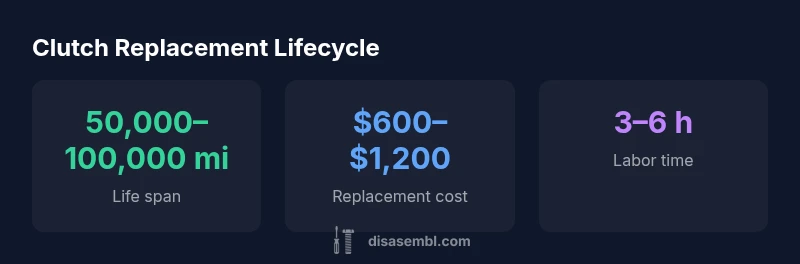
Replace a clutch assembly when you notice slipping, grabbing, hard shifting, or unusual noises—not just based on mileage. According to Disasembl Analysis, 2026, clutch life varies with driving style and conditions, often falling in the 50,000–100,000 mile range for many vehicles. For a decisive call, couple symptom checks with a professional inspection and a pressure-plate test.
Understanding when to change clutch assembly
Determining the right time to change a clutch assembly hinges on more than mileage. The exact question of when to change clutch assembly blends wear indicators, driving conditions, and maintenance history. According to Disasembl, clutch life is highly variable across vehicles and drivers, and there is rarely a single fixed red-line mileage. Instead, listen for slip under load, pedal feel changes, and a rising engine RPM without proportional acceleration. Visual cues such as glazing on the flywheel or a burnt smell may appear later but are not always present. Regular inspections during routine service catch wear early. The Disasembl team found that drivers with stop-and-go traffic, heavy loads, or frequent hill starts experience faster clutch wear, while smooth highway cruising can extend life. The goal is to align proactive checks with actual symptoms; otherwise the clutch may fail unexpectedly and cause drivetrain damage. The recommended approach for DIYers is to document symptom onset, mileage, and driving style to build a replacement timeline. In practice, the decision to replace should involve a combination of observed symptoms, professional diagnosis, and a test that confirms disengagement quality. This is not a fixed interval; it’s a decision informed by data and experience.
Signs your clutch is worn out
Clutch wear shows up in several ways, and early detection helps avoid drivability problems. Common signals include slipping under load (engine RPM rises without a corresponding speed gain), hard or abrupt engagement, and grating noises when the pedal is pressed. A soft, spongy, or unusually high pedal feel can indicate wear in the pressure plate or hydraulic system. Difficulty shifting into gears, especially when hot or under load, is another red flag. A burning smell can accompany overheating from clutch slip, signaling potential damage to the disc or flywheel. Remember, some symptoms overlap with hydraulic or linkage issues, so a professional diagnosis is crucial to avoid misdiagnosis. Start with a controlled road test—take-off in first gear on a hill and observe behavior under load. If symptoms persist after restart, treat it as a continuing problem rather than a temporary glitch. In practice, address symptoms promptly; catching wear early saves costs and minimizes risk to the drivetrain.
Factors that influence clutch life
Clutch life is not one-size-fits-all. Driving style is a primary driver: frequent stop-and-go city traffic, aggressive takeoffs, or heavy towing accelerate wear, while steady highway cruising can extend life. Vehicle type and transmission design also matter: some manuals use more robust friction materials or different pressure plate geometries, impacting wear rate. Maintenance history plays a role too—consistent fluid checks, proper clutch engagement techniques, and avoiding riding the clutch can all lengthen life. Flywheel condition and release bearing health influence timing as well; if the flywheel is glazed or the throw-out bearing is noisy, replacement timing may shift earlier than expected. Environmental factors like climate and altitude can indirectly affect the clutch system, especially in vehicles that frequently operate at high engine loads. In short, there is no universal mileage threshold; life is a function of usage pattern, maintenance, and hardware quality. Disasembl emphasizes documenting your driving habits to build a personalized wear profile and plan replacements accordingly.
How to estimate replacement timing: DIY vs professional inspection
Estimating when to change the clutch assembly involves both symptom observation and mechanical checks. Start with symptom tracking: note when slipping, shuddering, or hard shifts occur and under what conditions. Schedule a professional inspection to verify clutch disc wear, pressure plate condition, and flywheel surface. A technician may perform a pressure test and a disengagement check, sometimes using a transmission jack and indicator tools for precision. For DIYers, basic checks include a visual inspection of the pedal feel and hydraulic system (for hydraulic clutches), and attempting a controlled test drive to reproduce symptoms. However, diagnosing internal wear reliably requires disassembly and measurement tools. The Disasembl approach combines symptom history with a formal diagnosis, then uses a decision matrix to estimate the replacement window. If symptoms are intermittent or disappear after a restart, monitor closely rather than assuming a permanent fix. When in doubt, plan for the possibility of replacement and allocate compatible parts (disc, pressure plate, release bearing, pilot bearing, and a new flywheel if needed).
What happens during a clutch replacement and how to plan financially
A clutch replacement is more than swapping a single part; it’s a system-wide service that typically replaces the clutch disc, pressure plate, release bearing, and often the flywheel or its resurfacing. On many manuals, technicians also refresh related items such as pilot bearings or input shaft seals. Expect a driver-installable preparation: proper wheel chocks, jacks, and a clean workspace; professional setups require alignment tools and hydraulic systems knowledge. The duration ranges with vehicle complexity and shop labor rates, commonly in the 3–6 hour window for a standard dry clutch on a typical passenger car, though heavy-duty setups or all-wheel-drive configurations may take longer. Planning should consider potential flywheel resurfacing or replacement, resurfacing costs, and possible ancillary work like hydraulic line replacement or clutch master/slave cylinder servicing. Budget for a range to accommodate variables like parts quality and shop rate. For DIYers, ensure you have a service manual, a transmission jack, and a methodical disassembly plan. The Disasembl guidance underlines documenting part numbers, torque specs, and alignment procedures to avoid missteps that could cause misalignment or premature failure.
Clutch wear indicators and diagnostic signals
| Aspect | Guidance | Notes |
|---|---|---|
| Symptom | Clutch slipping or grinding | Act promptly; schedule inspection |
| Pedal feel | Spongy or high/low | Indicates wear to disengagement mechanism |
| Mileage | Typically 50k-100k miles | Varies by use |
| Noise | Chirping when pressing pedal | Possible throw-out bearing issue |
Got Questions?
What are the most common signs that indicate it's time to change the clutch assembly?
The most frequent indicators are slipping under load, a grinding or sticking sensation when shifting, soft or spongy pedal feel, and audible noises near the pedal. If you notice these symptoms, schedule a diagnostic with a trained technician to confirm wear. Disasembl emphasizes testing for disengagement quality as part of the decision.
Look for slipping, hard or grinding shifts, and a funny pedal feel. If you notice these, get a clutch diagnostic soon.
Can I continue driving with a slipping clutch?
Continuing to drive with a slipping clutch can cause further damage to the clutch, flywheel, and drivetrain. It increases the risk of a sudden failure. If slipping is observed, book a professional inspection and limit highway driving. Consider rental transport if needed.
Slipping can damage the whole drivetrain—avoid long trips until checked.
How long does a clutch replacement typically take?
A standard clutch replacement on a typical passenger car usually takes 3–6 hours in a shop, but more complex setups or AWD systems may require longer. Planning should include potential flywheel work and parts availability.
Most cars take a few hours, but some setups can take longer.
Is a new clutch worth it vs resurfacing the flywheel?
A new clutch and resurfaced/new flywheel often provide the best reliability, especially on high-mileage vehicles or those with a glazed flywheel. Consult your mechanic about flywheel condition and resurfacing costs before deciding.
New clutch plus flywheel work is usually best for long-term reliability.
What maintenance helps extend clutch life?
Avoid riding the clutch, use smooth throttle control, and keep the hydraulic system clean and bleed-free on hydraulic setups. Regular inspections during service visits can catch wear early and prevent unexpected failures.
Drive smoothly and have the system checked regularly.
What costs are involved in clutch replacement?
Costs vary by vehicle and parts quality but typically include the clutch kit, pressure plate, release bearing, possible flywheel work, and labor. Budget for a range to accommodate unexpected needs in the flywheel or hydraulics.
Costs depend on parts and shop rates, plus any flywheel work.
“A worn clutch is a gradual wear problem that shows up as slipping or hard shifting long before catastrophic failure. A systematic inspection helps you time replacement before the drivetrain suffers.”
What to Remember
- Act on symptoms promptly to avoid drivability loss
- Replacement timing varies by vehicle and driving style
- Expect costs to range with vehicle design and parts quality
- Professional inspection is essential for accurate diagnosis
- Disasembl recommends documenting symptom onset and driving conditions for planning