Do You Need Tools to Assemble Ikea Furniture? A Practical DIY Guide
Discover whether you need tools to assemble Ikea furniture. This Disasembl guide explains what's included, essential extras, safety tips, and efficient setup for DIY homeowners.


Yes. Most IKEA furniture can be assembled with the tools in the box, usually an Allen wrench. You’ll benefit from a basic screwdriver, a hammer or rubber mallet, and a tape measure for precise alignment. This Disasembl guide explains what you need, when you need it, and how to assemble confidently without extra gear. By planning ahead and organizing fasteners, you can complete most pieces in under an hour.
Do you need tools to assemble IKEA furniture? Understanding the basics
IKEA furniture is designed around a modular approach, where many parts are predrilled and joined with cam fasteners or dowels. In most cases, the box includes an Allen wrench (the hex key) to tighten the fasteners. You may need additional tools for certain pieces, but you can usually complete most builds with a small starter toolkit. This section covers when an extra screwdriver, mallet, or measuring tape becomes useful and how to decide what to pull from your toolbox before you begin. Planning ahead saves time, reduces mistakes, and makes the process less frustrating for first-time builders or seasoned DIYers alike.
What IKEA typically includes in the package
Most IKEA flat-pack shipments contain: user manual, hardware pack with cam connectors, screws, dowels, drawer slides, and an Allen wrench or hex key. The exact contents vary by product line, but the included hex key is common across most items. The presence of dowels and cam connectors means it's helpful to have a few basic tools available as a backup, even if the instruction manual instructs you to use only the included hex tool. Keep fasteners organized in small containers to avoid mixing sizes.
Essential tools everyone should have
- Allen wrench (included with most items) in the correct hex size for your hardware. Optional: extra hex keys in common sizes.
- Screwdriver (Phillips and flat-head) for cross-head and slot screws that may appear in some kits.
- Rubber mallet or small hammer to nudge pieces together without damaging surfaces.
- Tape measure or ruler for checking clearances and alignment.
- Level to ensure shelves and cabinets sit square and evenly.
- Small pliers for pulling out packaging debris or gripping stubborn connectors.
- Utility knife or scissors for opening bags and trimming tape labels. Optional but helpful: clamps to hold parts while you tighten screws, a cordless drill with low torque for fasteners (use with care to avoid overtightening).
How to tell when a screwdriver is necessary
In most IKEA builds, if a fastener is a cross-head or requires a small slot screw, you’ll want a screwdriver. The included hex key covers most cam fasteners and dowels, but a Phillips or flat-head screwdriver speeds up some steps or helps when a component has a different screw type. If you see screws with a plus or minus head, grab the appropriate screwdriver. Always start tightening gradually and check alignment as you go to avoid over-tightening.
Techniques for safe and efficient assembly
Safety and efficiency come from planning and patience. Start by organizing all hardware by type and size, then dry-fit sections to confirm fit before tightening. Use gentle, incremental turns rather than full-force tightening; overtightening can strip threads or crack panels. Work on a flat, stable surface and keep the workspace clean to prevent losing small parts. Taking short breaks can help you stay focused and avoid mistakes.
Handling dowels, cams, and fasteners
Dowel and cam connections are common on IKEA pieces. Insert dowels firmly, then align cam connectors with adjacent panels. Turn the cam to secure, but stop as soon as it’s snug—over-tightening can misalign panels. If a connection feels loose, back it off slightly and re-seat the parts. Keep track of which fasteners belong to which location to prevent cross-placement errors.
Tips for avoiding misalignment and gaps
Misalignment usually comes from rushing the first few steps. Dry-fit each major section, then tighten in order from the base outward. Use a level on taller assemblies and check diagonals to ensure squareness. If a panel sits unevenly, gently loosen the nearest screws, adjust the panel, and re-tighten. Clean surfaces before final tightening to prevent grit from causing gaps.
Tools vs. no-tools scenarios by product line
Simple shelves or small cabinets often rely almost entirely on the included hex key. Larger wardrobes, dressers, or wall-mounted units may benefit from a level, tape measure, and extra hands for alignment. Loftier pieces with complex cam systems can still be built with the standard toolkit, but having a second person to help line up holes and panels makes the process smoother and faster.
Final thoughts on cost, time, and setup
A minimal tool kit keeps upfront costs low and makes disassembly easier later. Plan for realistic assembly time by product size and your experience level. A tidy, well-lit workspace reduces mistakes, and keeping the instruction manual handy ensures you can revisit steps if needed. With the right basic tools, most IKEA projects become straightforward, predictable DIY tasks rather than frustrating puzzles.
Tools & Materials
- Allen wrench (included with most IKEA furniture)(Often the built-in hex key; check the package contents.)
- Phillips screwdriver(Useful for screws that may require a cross-head even if not included.)
- Flat-head screwdriver(Backup for rare fasteners; helps with prying or prying masking tape if needed.)
- Hammer or rubber mallet(Gentle tapping helps align dowels and cam connectors without damage.)
- Tape measure(Checks clearances and ensures level shelves align with marks.)
- Level(Keeps furniture square; especially important for tall units.)
- Pliers(Grips stubborn components or pulls free packaging debris.)
- Safety gloves(Protects hands during longer builds or when handling sharp hardware.)
Steps
Estimated time: 60-90 minutes
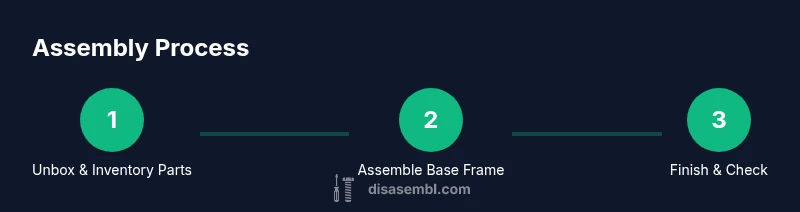
- 1
Unbox and inventory parts
Carefully remove all contents and lay pieces out on a soft surface. Cross-check against the parts list in the manual to ensure nothing is missing before you start.
Tip: Take a photo of the unpacked contents to reference while assembling. - 2
Sort fasteners and components
Group screws, dowels, and cam connectors by size and type. Label bags or place into labeled containers to prevent mix-ups as you work.
Tip: Keep a separate bag for spare hardware in case you lose something later. - 3
Attach base frame and rails
Start with the bottom or back frame first. Align holes carefully and insert connectors evenly to avoid binding later.
Tip: Dry-fit before tightening to verify alignment. - 4
Join side panels
Connect side panels using dowels and cam connectors. Tighten gradually, checking that edges stay flush with adjacent parts.
Tip: Use a mallet to gently seat parts instead of forcing them with a screwdriver. - 5
Install shelves or drawers
Slide rails or supports into position and secure shelves as instructed. Ensure edges sit level to avoid tilt.
Tip: Avoid overtightening shelf supports to prevent warping. - 6
Secure top panel and finish
Attach the top panel last, aligning with predrilled holes. Re-check all connections for stability.
Tip: Leave a small gap for wood expansion if required by design. - 7
Check alignment and level
Place the finished unit on a flat surface and verify vertical and horizontal alignment with a level. Adjust feet if needed.
Tip: Diagonals are a quick check for squareness. - 8
Tidy up and test stability
Tighten any loose screws, wipe away dust, and test the unit by applying gentle lateral pressure to ensure stability.
Tip: Securely anchor top-heavy units to the wall if included in the design.
Got Questions?
Do all IKEA products come with an Allen key?
Most IKEA products include a hex key, but always verify the contents in the hardware bag before starting. If a key is missing, contact customer support.
Most IKEA products include a hex key, but check the hardware bag first. If missing, contact customer support.
Can I use a power drill to speed up assembly?
A power drill can speed up fasteners, but use only low torque and the correct bit to avoid stripping or damage.
You can use a drill on low torque with the right bit, but be careful to avoid damage.
What if screws or cams are missing?
If any hardware is missing, stop and contact the retailer or manufacturer. Do not improvise with incompatible parts.
If parts are missing, stop and contact support rather than improvising.
Are there tools recommended for assembling wall units?
For wall-mounted pieces, a level, measuring tape, and wall anchors (if included) help ensure proper alignment and safety.
Use a level and tape to ensure wall-mounted units are aligned and safe.
Is it safe to assemble on carpet?
Assemble on a hard, flat surface. Carpet can cause instability and misalignment during assembly.
Avoid carpet; use a hard, flat surface for stability.
How long does IKEA assembly typically take?
Time varies by project size and experience; plan for a flexible window, typically longer for larger pieces.
Time depends on size and experience; be prepared for a bit of a learning curve.
Watch Video
What to Remember
- Most IKEA builds need only the included hex key.
- Organize hardware before starting to save time.
- Avoid overtightening to prevent damage or misalignment.
- A clean, well-lit workspace speeds up assembly.