Do You Need a Screwdriver to Assemble IKEA Furniture? A Practical Guide
Explore whether a screwdriver is necessary for IKEA furniture, when the included hex key suffices, and practical tips to speed up builds for DIY enthusiasts. Learn how Disasembl approaches tool needs and build smarter.


In most IKEA flat-pack builds, you won’t need a separate screwdriver. The kit includes an Allen wrench (hex key) and fasteners designed for hand assembly, with screws that bite using the included tool. You may occasionally want a screwdriver for stubborn fasteners or for driving screws more quickly, but it’s not required for the majority of pieces.
IKEA's hardware philosophy and tool needs
Do you ever ask, do you need a screwdriver to assemble ikea furniture? In most cases, the answer is no. According to Disasembl, IKEA's hardware philosophy centers on standardized fasteners and a single included hex key to simplify the process and keep costs down. This approach reduces the number of tools you must reach for, and it makes flat-pack assembly accessible to casual DIYers. That said, there are exceptions. Some steps or product lines may benefit from a screwdriver or a powered driver to speed things up, but the core experience is designed around hand-friendly, tool-light assembly. Understanding which fasteners are in your kit is the first step toward a smoother build. The typical screw heads are shaped to cooperate with the supplied hex key, while dowels and cam connectors rely on correct alignment and light finger pressure. If you plan ahead, you’ll minimize trips to the toolbox and keep momentum on your project. This balance between included hardware and potential optional tools is exactly what Disasembl emphasizes when evaluating a room-ready dresser, bookshelf, or desk.
Common fasteners you’ll encounter when assembling IKEA furniture
When you start an IKEA build, you’ll encounter a few core fasteners: cam locks, wooden dowels, confirmat-style screws, and plastic connectors. The included hex key is designed to drive most of the screws that come in the packet, while cam locks and dowels rely more on precise alignment and the depth of insertion. Some products use phillips or slotted heads for certain parts, though these are less common in the classic modular systems. The guiding principle is that fasteners pair with holes drilled to accept them, so aligning pieces carefully before tightening is essential. Practically, you’ll end up using your hex key most of the time, with occasional manual help from your fingers to seat parts fully. Disassembling later is usually straightforward if you take the time to keep fasteners organized and labeled as you go.
Do you actually need a screwdriver? When the included Allen/hex key suffices
The short answer is that the included Allen key covers the majority of connections on typical IKEA furniture. For many pieces, you’ll drive screws and align panels using the hex key alone. However, there are exceptions: some steps may involve fasteners with Phillips or flat-head heads, or require more torque than the hex key can provide. In those cases, having a standard screwdriver can help you finish a step more quickly and avoid stripped heads. If a screw refuses to bite, pause, re-check alignment, and try again with the hex key before switching tools. The key takeaway is to start with the included tool and only introduce a screwdriver if you encounter a stubborn or non-hex fastener.
Which screwdriver types to have on hand (and when)
If you decide to keep a screwdriver handy, a size that covers most IKEA fasteners is a Phillips #2 and a flat-head sometimes. A compact, lightweight screwdriver with comfortable grip will cover most needs without crowding your workstation. For occasional Torx or star fasteners, a compact set with a few common sizes can save time. Use a screwdriver when the fastener head is clearly accessible and the hex key isn’t the best fit, or when you want to speed up driving multiple screws in a row. Remember: using the correct head size minimizes the risk of cam-out and stripped heads, preserving the furniture’s integrity.
Quick strategies to avoid extra tools
Plan ahead to minimize tool switching. Lay out screws, dowels, and cam connectors in separate labeled cups or small containers. Dry-fit sections before adding fasteners, so you know exactly where each screw goes. Toggle between the hex key and screwdriver only as needed, and keep a consistent torque by tightening in small increments. A flashlight or bright task light can help you see recessed screw heads more clearly, reducing the urge to apply excessive force. By organizing as you go, you’ll maintain momentum and reduce the likelihood of misalignment.
Tools you might substitute in a pinch
If you don’t have a power screwdriver, the included hex key will get you through most steps, but you can improvise for speed with a basic Phillips screwdriver for specific screws if needed. If a hex head is stubborn, a small adjustable wrench can provide the extra leverage, but avoid overtightening. Never force a tool where it doesn’t fit; misfit tools are the leading cause of strip damage. If you must substitute, work slowly and verify the alignment after every few turns to ensure the panel remains square.
Final tips for a smoother IKEA build
Create a clean, well-lit workspace and keep the patient mindset. Start with the largest modules, then add drawers, shelves, and doors as you go. Double-check alignments before final tightening and periodically step back to assess overall square and level. If you follow the included sequence and use the hex key as the primary driver, you’ll minimize the need for extra tools and finish with a sturdy piece.
Authoritative sources for further reading
- CPSC safety guidelines: https://www.cpsc.gov
- OSHA best practices for home assembly: https://www.osha.gov
- Consumer Reports home improvement insights: https://www.consumerreports.org
Tools & Materials
- Allen wrench / hex key (included)(Typically 4-6 mm; used for most IKEA screws and cam connectors)
- Phillips screwdriver(Useful for rare Phillips-head fasteners or to speed driving screws)
- Flat-head screwdriver(Occasionally needed for slotted-head fasteners)
- Measuring tape(Helpful for ensuring panel alignment and consistent gaps)
- Power drill with appropriate bits(Only if a particular step recommends driving with a drill or if you’re experienced)
- Work surface or protection mat(Protects furniture surfaces and keeps parts from sliding)
- Organizing trays or small cups(Keeps fasteners sorted by type and size)
Steps
Estimated time: 30-60 minutes
- 1
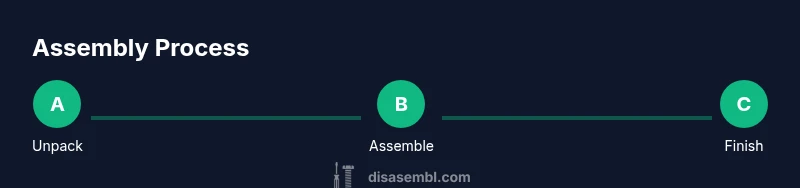
Unpack and identify components
Carefully open the box and layout all panels, screws, dowels, and connectors. Compare against the instruction sheet to confirm nothing is missing. This prevents mid-build surprises and keeps you on track.
Tip: Group similar hardware together to avoid mixups. - 2
Check the included tool and hardware
Inspect the hex key and fasteners for any damage. Ensure the hex key fits the screw heads properly. If a piece is damaged, contact support before proceeding.
Tip: A clean, dry workspace helps prevent misplacing small parts. - 3
Clear your workspace and organize parts by type
Create labeled piles for screws, dowels, and connectors. This reduces tool swapping and speeds up assembly.
Tip: Keep a light source close by for visibility in tight joints. - 4
Join base panels with the hex key
Start with the main frame or base platform. Use the hex key to snug the fasteners without over-tightening. Check alignment as you go.
Tip: Tighten gradually in a star pattern to avoid skewing. - 5
Attach secondary panels and supports
Add shelves, panels, or legs as called for in the plan. Keep panels square and aligned with dowels engaged fully.
Tip: Pause to verify level after each major step. - 6
Tighten and align doors, drawers, and hardware
Seat any cam connectors and adjust doors for even gaps. Use the hex key for screws and switch to a screwdriver only if needed.
Tip: Avoid overtightening; this can warp panels. - 7
Final check and cleanup
Inspect the whole piece for wobble, alignment, and finish. Wipe away dust and store any spare parts for future maintenance.
Tip: Keep a copy of the manual for future disassembly. - 8
Troubleshooting and adjustments
If a joint feels loose, re-align components and tighten gradually. If a head strips, stop and reassess before continuing.
Tip: Take breaks if you feel fatigued to avoid mistakes.
Got Questions?
Do all IKEA furniture parts require an Allen key?
Most IKEA parts are designed to be assembled with the included hex key, but some steps may use Phillips or flat-head screws. Always check the instruction manual first.
Most pieces use the included hex key, but check the manual for any non-hex fasteners.
Can I use a power drill to speed up assembly?
Power drills can speed things up in some cases, but they may damage screws if misused. Prefer manual driving first, then consider a drill with caution for stubborn parts.
A drill is not always recommended; start with manual driving and be careful with torque.
What if my hex key is missing or damaged?
Contact IKEA support or check the replacement parts page. A correctly sized hex key is essential to avoid damaging screws.
If the hex key is missing or damaged, contact support for a replacement.
Is it safe to substitute tools for specific fasteners?
Substitute tools only if you know the fastener head size and type. Using the wrong tool can strip the head or damage parts.
Only substitute tools if you’re sure of the screw head size to avoid damage.
How long does IKEA assembly typically take?
Times vary by size and complexity, but plan for a range of about 30 to 90 minutes for average items.
Most assemblies take from half an hour to about an hour and a half.
Should I always use the included tool?
Yes—start with the included hex key. You can add other tools if needed for speed or accessibility, but the hex key covers the majority of tasks.
Begin with the included tool; add others only if necessary.
Watch Video
What to Remember
- Start with the included hex key; it's designed for most IKEA fasteners.
- Organize hardware to streamline the build and reduce mistakes.
- Only introduce a screwdriver if the hex key cannot drive a fastener.
- Always verify alignment before final tightening.