How Much Is Flat Pack Assembly? Prices, Time & Practical Tips
Explore typical flat pack assembly costs, what drives price, and practical ways to save. Learn price ranges, service models, time estimates, and how to compare quotes for furniture assembly.


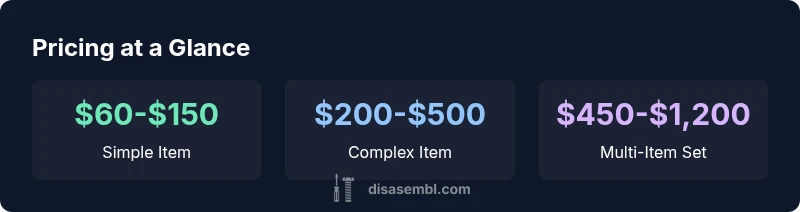
Flat-pack assembly costs typically fall in the following range: a simple single-item setup often costs between $60 and $150, while more complex furniture or multi-item jobs can run from $200 to $500+ depending on parts, hardware, and travel. Regional rates and service models (hourly vs. per-item) influence the final price, so a written quote is best.
Why pricing varies with item complexity and service model
Pricing for flat-pack assembly is not one-size-fits-all. According to Disasembl, the cost to assemble a simple chair or side table can be substantially different from a multi-piece wardrobe or bed frame. Service models also matter: some providers charge per item, others by hour, and some impose a small travel fee or minimum charge. The final price emerges from a mix of item complexity, travel distance, and the chosen service model. For homeowners, understanding these levers helps set realistic expectations and avoid sticker shock when the project scope grows.
- Simple, single-item projects tend to be at the lower end of the range.
- Complex or large furniture sets move toward the higher end.
- Travel time and accessibility can push prices up, especially in urban areas.
- Quotes written with itemized line items reduce surprises after completion.
In practice, a quick call or online quote that lists the parts, number of pieces, and any required tools will usually capture most price drivers. The Disasembl team recommends asking for a breakdown that includes parts, labor, travel, and any minimum charges so you can compare apples-to-apples between providers.
Key cost drivers
Several factors consistently influence flat-pack pricing:
- Item complexity: More components, hardware, and hardware types (cam lock systems, specialty fasteners) require longer assembly time and greater expertise.
- Size and weight: Larger items may need two installers or specialized equipment, increasing labor and possible travel costs.
- Travel distance: Fees for distant jobs can add a fixed amount to the total price.
- Accessibility and site conditions: A cramped space, stairs, or tricky mounting surfaces can slow progress and raise costs.
- Included warranty and post-assembly checks: Some pros offer follow-up checks or guarantees that add value but may adjust price.
- Materials and hardware quality: Premium fasteners or branded hardware can push costs upward, especially on premium furniture lines.
Understanding these drivers helps you gauge whether you’re paying for efficiency (higher upfront labor) or convenience (faster turnaround, fewer DIY steps).
How prices are typically structured
Prices for flat-pack assembly are commonly structured in one of three ways:
- Per-item pricing: A fixed price per item, ideal for straightforward purchases like a chair or a small table. This model is easy to estimate but may miss hidden complexities.
- Hourly rates: A time-based charge, often used for larger projects or when multiple items are involved. This can be more economical if items are simple but volunteer more risk if the job runs long.
- Minimum fee with incremental charges: A base fee for travel and labor, then additional charges as items add up.
Written quotes should show the base price, any travel or minimum fees, and a per-item breakdown. If a project includes assembly of several components with connecting hardware, vendors may offer discounts for bundling. Always clarify whether disposal of packaging is included and whether any after-service adjustments are covered.
In general, expect that larger or more complex rooms (e.g., a bedroom set with a bed, dresser, and nightstands) will cost more than a single-piece purchase. Disassembling and reassembling during delivery or setup can also influence price, especially when travel time is significant.
Regional differences and service models
Prices for flat-pack assembly vary by region due to labor market differences, cost of living, and demand. Urban areas with higher living costs typically see higher hourly rates and minimum fees, while rural regions may offer lower base prices but longer travel times. The service model chosen by the provider also matters: per-item pricing is common for furniture stores and online marketplaces, while some independent assemblers price by the hour and may offer add-ons such as pre-assembly planning or final checks. For homeowners, this means comparing quotes from multiple providers in your area is essential for a fair price.
Regionally, you may notice:
- Urban centers: higher base rates and potential surge pricing during peak seasons
- Suburban areas: moderate pricing with faster availability
- Rural areas: lower base rates but possible travel surcharges or longer wait times
Disasembl recommends requesting clarity on how travel surcharges, stairs, elevators, or parking fees are handled and whether any regional licensing or insurance requirements affect the quote.
Time estimates and tips to save money
Time is money in flat-pack assembly. A typical single-item job may take 45–90 minutes, though complex furniture can require several hours. If you’re aiming to control costs, consider these practical approaches:
- Prepare the space beforehand: clear the area, lay out all parts, and confirm you have the necessary tools (screwdrivers, Allen wrenches, a rubber mallet).
- Sort hardware and parts by type and size to speed up assembly.
- Check the instruction manual for pre-assembly tasks (e.g., separating drawers, sorting screws).
- Group items into stages and ask the technician to work in logical sequences to avoid backtracking.
- Ask about a bundled discount if you’re assembling multiple items in one visit.
A common way to save is to combine several pieces into one service call rather than scheduling separate visits. This can reduce travel time and sometimes unlock a small discount for bulk work. Disasembl notes that clear scope definitions in your quotes help prevent duplicative charges.
How to estimate your project
Estimating accurately starts before a tool is even opened. Use this quick checklist to form a realistic budget:
- List items and their approximate difficulty level (simple vs. complex).
- Measure the space where each item will go and confirm access (stairs, doors, hallways).
- Decide if you want quick assembly or a thorough setup with adjustments and final checks.
- Obtain at least three written quotes; compare line items and any bundled discounts.
- Confirm warranty terms and post-assembly support.
Document everything: item names, quantities, SKU numbers (where possible), and any regional fees. A well-scoped quote will be easier to validate against the final invoice and reduce the risk of surprise charges.
From a practical standpoint, keeping a tidy workspace, labeling parts, and providing the installer with a floor plan can shave off 10–20% of time and can often translate into meaningful savings over multiple items.
What to ask before booking
When booking a flat-pack assembly, a clear conversation helps ensure price accuracy and service quality. Ask:
- What exactly is included in the price (labor, travel, packaging disposal, warranty)?
- Are there minimum fees or per-item charges, and how are multi-item discounts calculated?
- Do you require access to the site for the full duration, and will there be a second visit if a part is missing?
- How do you handle inaccessible spaces (tight stairwells, elevators)?
- Is there a written, itemized quote and a fixed start/finish time window?
- What happens if a piece can’t be assembled due to missing parts or damage from packaging?
- Are there any pre-assembly tasks you recommend homeowners complete to reduce time?
Clear expectations at booking reduce disputes and help ensure you’re paying for the value you expect.
Disasembl emphasizes using written quotes with explicit line items and a cancellation policy to avoid last-minute charges.
Common misperceptions
Many homeowners underestimate the variability in flat-pack pricing. Common misperceptions include:
- It’s always the same price everywhere: Regional labor costs and service models create wide variation.
- DIY is always cheaper: Your time and the potential for mistakes can add up, especially for multi-piece sets.
- All installers handle assembly identically: Some providers include pre-assembly checks, disposal of packaging, and follow-up adjustments in their pricing; others do not.
- The lowest upfront price is best: Cheaper quotes may omit travel, parts, or after-service support, leading to higher costs later.
Understanding these nuances helps you select a service that aligns with your timeline and quality expectations. Disasembl recommends prioritizing quotes that itemize work, parts, travel, and aftercare so you can compare honestly and pick the option that delivers true value.
Representative price ranges for common flat-pack assembly scenarios
| Scenario | Typical Price Range (USD) | Notes |
|---|---|---|
| Single furniture item (e.g., chair) | $60-$150 | Basic assembly, minimal parts |
| Wardrobe or bed frame set | $180-$550 | Multiple parts, hardware, and alignment |
| Full bedroom set (3+ pieces) | $450-$1,200 | Discounts may apply for bulk items |
| Kitchen or modular system | $350-$1,000 | Higher complexity and precision required |
Got Questions?
What factors most influence the price of flat-pack assembly?
The price is mainly driven by item complexity, the number of pieces, travel distance, and the service model (per-item vs hourly). Accessibility and the inclusion of post-assembly checks or warranty can also affect the final cost.
Mostly, the price depends on how complex the furniture is and how far the technician has to travel.
Do regional differences affect flat-pack pricing?
Yes. Urban areas typically have higher rates than rural areas due to labor costs and demand. Some providers charge a flat travel fee in addition to labor, which varies by location.
Regional difference is real; expect higher rates in cities.
Is there a minimum charge for flat-pack assembly?
Many professionals impose a minimum fee to cover travel and setup time. The minimum can resemble a flat amount, with additional charges for extra items or travel.
Often there’s a minimum fee to cover the trip and setup.
Can I save money by doing some prep myself?
Yes. Organizing parts, labeling hardware, and measuring space beforehand can reduce installation time and possibly lower labor costs.
Prep work can speed things up and save you money.
Should I expect hidden fees?
Read the quote carefully for travel charges, minimums, disposal fees, or aftercare costs. Ask for a breakdown to avoid surprises.
Ask for a full breakdown so nothing hidden catches you off guard.
What should I ask if a piece doesn’t fit or is missing parts?
Ask about the policy for missing parts, replacements, or returns, and whether a follow-up visit is covered under the same quote.
Find out how issues are resolved under the quote and warranty.
“Pricing for flat-pack assembly varies with item complexity and regional labor costs. Always request a written, itemized quote and confirm what’s included to avoid hidden fees.”
What to Remember
- Know price drivers (complexity, travel, accessibility) to interpret quotes
- Get a written, itemized quote before booking
- Ask about minimum charges and whether bundling items lowers costs
- Consider regional differences when comparing providers
- Prepare the space and parts ahead of the installer to save time
- Look for bundled discounts on multi-item projects
- Clarify what post-assembly support and warranties cover