How to Assemble a Cabinet: A Complete Step-by-Step Guide
Learn how to assemble a cabinet with a clear, beginner-friendly step-by-step process. This guide covers tools, parts, safety, assembly steps, troubleshooting, and care for a sturdy, long-lasting cabinet.


By following this guide, you'll learn how to assemble a cabinet from start to finish, including identifying parts, attaching panels, and anchoring the unit. You'll need a basic toolkit, a clean workspace, and the cabinet’s hardware. This step-by-step plan covers preparation, assembly, alignment, and safety considerations.
Understanding Cabinet Types and Plans
For anyone facing the task of how to assemble a cabinet, recognizing the type you’re building is the first step. Cabinets come in framed, frameless (European), and partial-overlay styles, each with different hardware needs and panel layouts. Before you touch a screw, review the instructions that came with your kit and lay out all panels on a soft, flat surface. Clear labeling helps you keep track of left/right sides and top/bottom parts, which minimizes rework. In this Disasembl guide, we emphasize practical planning: measure space, confirm load requirements, and anticipate future use—will you add adjustable shelves or a filing drawer? The key is to align your expectations with the cabinet’s purpose, whether it’s a kitchen base, a bathroom vanity, or a storage wall.
According to Disasembl, a quick part inventory saves time and avoids last-minute scrambling for mismatched screws or panels.
Tools and Materials You'll Need
As you prepare to assemble a cabinet, gather a basic toolkit and the hardware provided with your kit. Having the right tools speeds the process and improves results. Essential items include a screwdriver (Phillips #2), a power drill with a screwdriver bit, a tape measure, a level, and a pencil for marking. You’ll also want clamps or a couple of hands to hold pieces steady while you drive screws. Optional but highly useful are a rubber mallet, wood glue for added panel stiffness, and safety glasses to protect your eyes during drilling. Keep a tote or tray for small screws and cam locks so nothing goes missing. Safety note: work in a well-lit area on a stable surface to prevent slips that can damage panels.
Step 1: Inventory and Organize Parts
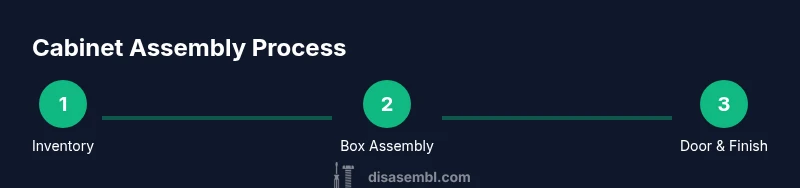
Begin by inspecting all parts and hardware. Match every panel against the parts list and lay out fasteners by type in labeled containers. This prevents misplacing a cam lock or hinge screw later. If a panel arrives warped or damaged, set it aside for replacement rather than forcing it into place. Group steps where possible: boards for the box, shelves, doors, and hardware for hinges. This organization reduces errors and speeds up assembly, especially for first-time cabinet builders. In this stage, also verify the cabinet’s interior dimensions align with your intended space so doors won’t bind.
Tip: take a quick photo of the parts layout for reference if you’re working with a longstanding kit or multiple cabinets.
Step 2: Build the Box (Frame)
Constructing the cabinet box is the backbone of the build. Start with the base panel, then attach the side panels, ensuring corners are square. Use a square or a level to confirm right angles before tightening screws. If the kit uses cam-locks, insert them loosely first so you can tweak alignment before final tightening. Remember to check that the back panel is square to the front face; a misshapen box will cause doors to misalign later. A light dab of wood glue on joints can improve rigidity, but avoid excess that could squeeze out and create a gluey mess.
Pro tip: tighten gradually in a criss-cross pattern to maintain even pressure and prevent warp.
Step 3: Install Shelves and Support Rails
With the box square, install the shelf supports or rails according to the plan. Short shelves go on the lower half for stability, while tall shelves may require extra center supports. If your cabinet uses adjustable shelves, insert the support pins first and then add the shelves, ensuring each shelf lies flat and level. When installing rails, keep screws near the center of the panel to avoid splitting. If you’re mounting in a wet area, consider corrosion-resistant hardware.
Tip: test-fit a shelf before committing to screws to ensure length and clearance are correct.
Step 4: Attach Doors and Hinges
Door alignment is critical for a functional cabinet. Attach hinge plates to doors first, then align them with the cabinet carcass. Use a helper to hold the door steady while you tighten screws. Check the gap around the doors; consistent margins indicate proper alignment. If the doors rub, adjust the hinge tension and shim as needed. Depending on your kit, you may also need to install magnetic or soft-close catches as a finishing touch.
Pro tip: loosen and re-tighten hinge screws after the doors are hung to allow micro-adjustments.
Step 5: Align, Level, and Anchor
Level the cabinet on both the horizontal and vertical axes. A misaligned unit won’t close evenly and may put uneven stress on the frame. If you’re mounting on a wall, locate studs and use appropriate anchors to secure the cabinet, preventing tip-overs. For freestanding installations, check that the base sits firmly and doesn’t wobble. In kitchen or bathroom applications, consider tying the cabinet to adjacent cabinetry or a wall panel to improve long-term stability.
Tip: use shims behind the base to achieve perfect leveling without forcing screws that could crack the panel edges.
Step 6: Finishing Touches and Safety Checks
Finish the build by removing any transit staples, trimming excess glue, and ensuring all screws are tight but not overdriven. Stand back and inspect for gaps, evenness, and door alignment. If you notice a squeak or loose rail, re-tighten and re-check. Perform a safety check: ensure no sharp edges are exposed and the cabinet is securely anchored if it’s tall or heavy. Finally, label your cabinet with care instructions if it will live in a shared space so others know how to use it without applying leverage on doors or shelves.
"## Maintenance and Care for Your Cabinet"
To extend the life of your cabinet, keep it clean and dry, inspect hardware annually, and address any warping or loosening screws promptly. Use a mild cleaner suitable for wood or laminate surfaces and dry immediately to prevent moisture damage. Re-tighten hinges after heavy use and re-check anchors if you notice any movement.
Common Pitfalls and Troubleshooting
Even experienced builders encounter a few common issues when learning how to assemble a cabinet. Warped panels, misaligned doors, and unstable bases are frequent culprits. The root causes are usually mismatched hardware, over-tightened screws, or inadequate support in the box. A careful re-check of each step, combined with a patient approach, can prevent costly mistakes. If doors rub, revisit hinge alignment and check for settled shims. If the cabinet wobbles, verify wall anchors and adjust leveling feet as needed.
Tools & Materials
- screwdriver (Philips #2)(Flat-head screwdriver may be needed for some fasteners.)
- drill with screwdriver bit(Use appropriate bit size for screws provided.)
- tape measure(Measure space and panel thickness accurately.)
- level (or spirit level)(Check horizontal and vertical alignment.)
- pencil(Mark pilot holes and alignment lines.)
- clamps(Hold pieces steady during assembly.)
- wood glue(Optional for extra rigidity on joints.)
- screws/fasteners(Use the exact sizes included with kit.)
- safety glasses(Protect eyes during drilling.)
- rubber mallet(Gently adjust panels without marring.)
Steps
Estimated time: 1 hour 30 minutes - 2 hours
- 1
Inventory and organize parts
Inspect all panels and hardware against the parts list. Lay out components by type and label them so you don’t mix up left/right or top/bottom pieces. This step reduces backtracking and helps ensure you have everything you need before you start.
Tip: Take a quick photo of the parts layout for future reference. - 2
Assemble the box (frame)
Attach the base to the side panels to form the box. Verify right-angle corners with a square or level before tightening screws. If your kit uses cam locks, loosely assemble first to adjust alignment later.
Tip: Criss-cross screw pattern helps maintain square corners. - 3
Install shelves and supports
Insert shelf supports or rails per the plan. If adjustable shelves are used, place pins first and test-fit shelves for levelness. Ensure no shelf is bowed or sits unevenly.
Tip: Test fit before final tightening to avoid rework. - 4
Attach doors and hinges
Mount hinge plates on doors, then align doors to cabinet carcass. Tighten screws gradually while checking gaps and alignment.
Tip: Loosen and re-tighten after hanging to fine-tune alignment. - 5
Level, anchor, and finish
Check level across the front and sides. Anchor to wall studs if tall or heavy. Clean any glue residue and ensure all screws are snug without over-tightening.
Tip: Use shims to achieve perfect leveling without stressing panels. - 6
Final safety check and care
Inspect for sharp edges, loose hardware, and overall stability. Wipe surfaces, store tools, and note maintenance steps for longevity.
Tip: Document any recurring issues and address them promptly.
Got Questions?
Do I need special tools to assemble a cabinet?
Most cabinets can be assembled with common tools like a screwdriver, drill, level, and square. Some kits include specialty hardware that may require a hex key or a specific bit. Always follow the manufacturer’s instructions for any nonstandard fasteners.
You usually only need basic tools, but check your kit for any special hardware.
What is the best way to avoid warping during assembly?
Keep panels flat on a supported surface, tighten joints gradually, and avoid overtightening screws. If a panel seems warped, set it aside and contact support before forcing it into place.
Make sure everything sits flat and aligned before tightening bolts.
How long does cabinet assembly take for a beginner?
For a single standard cabinet, plan for a few hours, factoring in setup, alignment, and finishing touches. More complex configurations or heavy wall cabinets can take longer.
Give yourself a few hours, especially if it’s your first cabinet.
Should I anchor the cabinet to the wall?
Yes, especially for tall or heavy cabinets, to prevent tipping. Use appropriate wall anchors and locate studs when possible.
Anchoring to studs is a smart safety step for tall units.
What if doors don’t align after installation?
Recheck hinge placement, adjust hinge screws, and ensure the cabinet is level. Small shims under the base can help correct alignment without forcing screws.
Adjust the hinges and re-check the cabinet level to fix misalignment.
Watch Video
What to Remember
- Plan before you build to avoid missing parts
- Keep panels aligned to prevent mis-shelving
- Anchor tall cabinets for safety and stability
- Use a criss-cross tightening pattern for square corners
- Fine-tune door alignment after hanging