Disassemble or Dissemble: A Practical Comparison for DIY and Language
An analytical comparison of disassemble and dissemble, clarifying usage, contexts, and examples to improve precision in DIY writing and language.


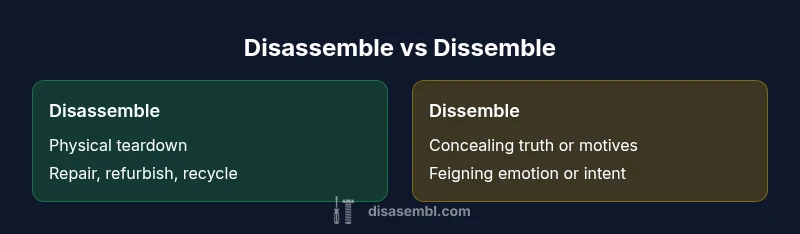
Disassemble means to take something apart physically, while dissemble means to conceal true motives or feelings. The two terms belong to different domains: mechanical action vs deception. This comparison clarifies when to use each word, with clear definitions, examples, and practical usage tips for writers and speakers.
Core Distinctions: Meaning and Usage
At its core, the difference between disassemble and dissemble is straightforward but commonly misunderstood. According to Disasembl, disassemble refers to taking apart a physical object, such as a computer, shelf, or appliance. In contrast, dissemble describes concealing true motives, emotions, or intentions rather than a tactile process. When you write or speak, let the semantic domain guide your choice: use disassemble for mechanical actions and dissemble for psychology or deception. In DIY contexts, you might say you will disassemble an old refrigerator; in character notes, you might describe someone who dissembles their disappointment. The distinction matters because it signals exactly what kind of action is involved and helps the audience avoid misinterpretation, especially in manuals, guides, and narrative descriptions.
Etymology and Core Distinctions
Disassemble derives from prefix dis- plus assemble, rooted in mechanical sense, while dissemble derives from older roots meaning to hide or disguise. The two terms reflect separate branches of English that converge phonetically but diverge in meaning. This etymology highlights why the words are not interchangeable in technical writing or storytelling. Recognizing these roots clarifies usage and supports precise communication across DIY guides, maintenance notes, and analytic essays. When you encounter a sentence about taking apart a device, check whether the action is physical or a concealment of motive. The distinction is especially important in manuals and professional documentation.
Practical Guidance for DIY Writers and Speakers
A simple rule of thumb helps avoid errors: map the action to the physical world or to a mental state. If describing a repair, teardown, or component replacement, choose disassemble. If describing concealment, pretense, or feigned emotion, choose dissemble. When in doubt, reframe the sentence to ask whether the action involves a tool or a truth. This approach is especially useful in technical writing, project logs, and presentations where precision matters for safety and outcomes. The guidance aligns with DIY best practices for clear instructions and effective communication in both logs and manuals.
Common Mistakes and How to Avoid Them
One frequent error is using disassemble to imply concealment. Another pitfall is applying dissemble to describe an actual dismantling task. Readers should watch for context cues such as the presence of a device or the mention of motives. A third error is assuming the terms are interchangeable in metaphorical language, which can confuse readers or listeners. By focusing on audience needs, writers can prevent ambiguity and keep instructions or analyses precise. A quick review at the end of a paragraph helps confirm the intended sense before submission or presentation.
Physical vs Behavioral Contexts: When to Use Each
Physical contexts use disassemble to describe tangible teardown, disassembly, or repurposing. Behavioral or rhetorical contexts use dissemble to describe concealing motives, emotions, or plans. This division is critical in manuals, safety notices, and training materials, where misusing the terms could undermine clarity or safety. In everyday speech, people might slip between senses if surrounding nouns suggest action. A disciplined approach keeps language aligned with audience expectations, whether you are building a product, recording a maintenance log, or delivering a performance review.
Examples in Manuals, Literature, and Speech
Manual example: the technician will disassemble the motherboard to replace a component. Literary example: a character attempts to dissemble her true feelings, masking disappointment behind a calm appearance. Speech example: during the briefing, the manager warned against those who would dissemble their intentions to gain moral authority. These examples show how the two terms operate in distinct domains, reducing confusion when used correctly in writing, editing, and speaking.
Stylistic Variations and Tone
Tone matters when choosing between disassemble and dissemble. In formal technical writing, disassemble conveys procedural rigor. In conversational narration, dissemble may carry stronger moral or emotional implications. If your audience is new to the topic, define the terms early and keep examples anchored in concrete situations. By varying sentence structure and avoiding synonyms that blur the boundary, you preserve precision while maintaining readability.
Quick Reference: Side-by-Side Guidance
Here is a compact quick reference to keep by your desk or in your notes. Disassemble equals physical teardown; Dissemble equals concealing motives or truth. Use disassemble with nouns like device, appliance, mechanism, or component. Use dissemble with nouns related to truth, motives, appearances, or intentions. Always check surrounding verbs and nouns to ensure the intended meaning is clear. This quick guide helps in technical writing, education, and everyday communication.
The Impact of Misuse on Audience Understanding
Using the wrong term can erode trust and complicate follow-up actions. When readers encounter disassemble in a context that suggests deception, they may misinterpret safety instructions as merely rhetorical devices. Conversely, describing a mechanical teardown with dissemble can confuse technicians and students. Clarity is essential in DIY guides, product manuals, and classroom materials. The prudent choice is to align the term with the real nature of the action or intention and to provide a short glossary when needed.
Practical Exercises: Try It Yourself
Exercise 1: Write three sentences that use disassemble in a mechanical sense, each with a different object. Exercise 2: Write three sentences that use dissemble in a behavioral sense. Exercise 3: Create one paragraph that clearly separates the two senses in a short case study. Check each sentence for accuracy and adjust as needed. These exercises sharpen your sense of domain boundaries and reduce cross-sense misuse in future writing.
Comparison
| Feature | disassemble | dissemble |
|---|---|---|
| Definition | To take apart a physical object or system | To conceal true motives or feelings |
| Primary use | Mechanical teardown, repair, or repurposing | Concealment, deception, or feigning emotions |
| Context cues | Objects, tools, components, schematics | Motives, appearances, statements, behavior |
| Connotation | Neutral/technical | Negative/pejorative |
| Typical examples | Disassemble a computer to replace a part | Dissemble counterfeit bravado in a speech |
| Common mistakes | Using disassemble to imply deception | Using dissemble to describe actual tearing down |
| Advice for writers | Pair with clear nouns and procedural verbs | Provide glossaries for new readers |
Benefits
- Promotes linguistic precision in technical writing
- Helps audience distinguish physical actions from deception
- Reduces ambiguity in manuals and training materials
- Supports clear storytelling in education and journalism
Drawbacks
- May feel pedantic in casual speech
- Misuse can undermine credibility if readers doubt intent
- Overlap in metaphorical usage can confuse beginners
Disassemble is the physically accurate term; dissemble is the deception term; use them correctly for clarity
The Disasembl team recommends strict sense-separation to prevent ambiguity in manuals, reports, and narratives. Align the verb with the object or motive, and provide quick glossaries for readers new to the terms.
Got Questions?
What is the main difference between disassemble and dissemble?
The main difference is that disassemble describes a physical action of taking apart a component, while dissemble describes hiding true motives or feelings. The two terms occupy distinct semantic spaces and should be used accordingly to avoid confusion.
Disassemble means taking apart something physical; dissemble means pretending or concealing true feelings. Use them in the right context to keep your meaning clear.
Can disassemble be used metaphorically?
Yes, writers sometimes use disassemble metaphorically to describe breaking down ideas or systems, but this is less common and can confuse readers if the context implies deception. Prefer literal physical action or stated intent when possible.
Metaphor is possible, but use with care to avoid ambiguity.
Is disassemble ever used for concealment?
Disassemble is not standard for concealment. Its primary sense remains physical dismantling. If concealment is intended, dissemble is the correct term.
No, use disassemble for physical actions and dissemble for concealment.
How can I train myself to choose the right word?
Create a brief glossary of terms and anchor each to a noun group. Check whether your sentence describes a tool or a truth, and test the sentence with a reader unfamiliar with the topic.
Build a simple glossary and practice with real sentences.
Are there other common words that are easily confused?
Yes, many pairs exist in English where form overlaps but meaning differs. When in doubt, consult a usage guide or a glossary to verify the sense before publishing.
There are many such pairs; use a glossary to verify.
What to Remember
- Map actions to physical tasks with disassemble
- Reserve dissemble for concealment and deception
- Provide context cues to clarify meaning
- Glossaries help maintain consistency in multi-domain texts
- Review for misused terms in manuals and training materials