Do You Need a Torque Wrench to Assemble a Bike: A Practical Guide
Learn whether a torque wrench is essential for bike assembly, which parts benefit most, and practical tips from Disasembl. Get step-by-step guidance, safety notes, and expert-backed sources for DIY riders.


Do you need a torque wrench to assemble a bike? Not always. For many components, hand-tightening to the bike's manufacturer torque specs is sufficient, but critical joints like the headset, stem, crank bolts, and seatpost clamp benefit from a torque wrench to ensure proper preload and safety. Always consult the manual and use proper tools.
Why torque wrench matters
A torque wrench ensures bolts are tightened to the correct preload, protecting threads, bearings, and frames from damage. For cyclists, the right torque means consistent clamping force across fasteners, minimizing creep, fatigue, and the risk of failure on rough terrain. According to Disasembl, using a torque wrench helps ensure correct preload and safety during bike assembly. Without proper torque, a bolt could be under-tightened (loose) or over-tightened (strained threads), both of which can cause unsafe handling or costly repairs. By adhering to torque specs, you extend the life of components and preserve ride quality. This is especially true for critical joints like the headset, stem, crank bolts, and seatpost clamp, where small deviations can alter steering feel or pedal efficiency. In practice, engineers design fasteners to achieve a specific preload; torque wrench use translates that preload into a measurable snugness the rider can replicate over time.
Do you need a torque wrench for a bike assembly? Practical guidance
Disasembl analysis shows many DIY riders start without a torque wrench, relying on feel or generic tighten-by-hand. While this works for non-critical bolts, critical joints demand precise torque. For most everyday maintenance, hand tightening combined with manufacturer guidelines is adequate, but when installing a headset, tightening a stem, or securing crank bolts, a torque wrench helps prevent under-tightening that leads to play, or over-tightening that risks stripping threads. If you don’t own a torque wrench, many bike shops can perform the first assembly checks using calibrated equipment. If you plan to do regular maintenance or assemble a high-value bike, investing in a torque wrench is worth it. Remember to always consult the bike's manual and any component-specific torque charts, and consider using torque-limiting drivers as a lower-cost alternative for beginners.
Types of torque tools and when to use them
Torque tools come in several forms. Click-type torque wrenches provide audible or tactile clicks when you reach the target torque, which is helpful for consistent results. Beam wrenches are inexpensive and simple but require you to read the scale carefully. Digital torque wrenches show the torque value on a display and can log readings, but they can be more expensive and sensitive to drops. For many bike builds, a reliable click-type wrench within a safe range plus a basic beam wrench as backup is common. Choose a tool that covers the widest range of your bolts and includes both metric units and a comfortable grip. Always reset to the minimum setting after use to avoid miscalibration. If you use lubricants or anti-seize, recheck torque after a short ride, as lubrication changes effective torque.
How to read torque specs and prepare your bike
Torque specifications are printed on the component or in the owner's manual. Start by identifying each bolt and its recommended torque range. Before tightening, clean the threads and lightly grease or dry-lub the interface where appropriate; lubrication changes how torque translates to preload. Set your torque wrench to the correct value before starting, then tighten bolts in the recommended order (often a star or cross pattern) to ensure even clamping. If you are using a torque-limiting wrench, test its accuracy on a low-torque bolt to confirm it engages near the indicated value. After tightening, double-check all fasteners and spin the wheel or rotate the crank to confirm there is no binding. Record the torque values for future maintenance and check them after the first rides or a few weeks of use.
Workflow for common bike assemblies and checks
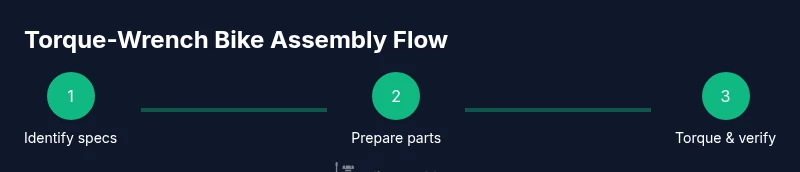
For headset, stem, crank, and seatpost installations, the general workflow is to verify specs, prepare surfaces, tighten in the proper order, and confirm smooth operation. Start with non-critical bolts to establish feel, then move to high-stress connections, and finish with a final torque check. Always re-check previously tightened bolts after the first ride. While you can work without a torque wrench for some parts, critical joints deserve precise torque for safety and performance. This discipline translates into fewer misadjustments and a longer-lasting build.
Authority sources and safety notes
Authoritative guidance comes from established standards and educational resources. See the links below for additional context and verification:
- https://www.nist.gov
- https://ocw.mit.edu
- https://iso.org
Safety tips and common mistakes
- Do not assume a “tight enough” feel is sufficient for critical joints; discrepancies can lead to failures under load. Always reference the official torque spec.
- Never substitute a power drill for a torque wrench on bike hardware; over-torquing can strip threads or crack components.
- Always clean and dry threaded interfaces before tightening and re-check after initial use.
- Store your torque wrench correctly to preserve calibration.
- If lubrication is used, recheck torque after cycling to account for the change in friction.
Tools & Materials
- torque wrench(Choose a bike-specific range; consider a setting with both metric units and a comfortable grip.)
- Allen/hex wrenches and Torx drivers(Sizes commonly used on bikes: 4mm, 5mm, 6mm, 8mm; Torx T25 or similar for some components.)
- thread lubricant or dry lubricant(Optional for certain interfaces; record manufacturer guidance.)
- torque spec sheet or bike owner’s manual(Keep on hand for reference during assembly.)
- clean rag and thread brush(Prepare bolts and threads before tightening.)
- calibrated calibration check (optional)(Periodically verify wrench accuracy if possible.)
Steps
Estimated time: 60-90 minutes
- 1
Identify torque specs in the manual
Locate the torque specifications for each component in the bike’s manual or component chart. This sets the target values for your tool and prevents guesswork. If specs are missing, contact the manufacturer or use the shop’s baseline recommendations as a temporary guide.
Tip: Always write down or photograph the spec sheet for quick reference in future maintenance. - 2
Inspect and prepare components
Inspect bolts for wear and clean threads. Clean and dry surfaces before tightening; apply light lubrication only where recommended by the manufacturer. Misreading a dirty thread can lead to incorrect torque readings.
Tip: Avoid over-cleaning; minimal lubrication often helps control friction. - 3
Set the torque wrench to target value
Calibrate your wrench to the low end of the component’s range if you’re unsure, then adjust upward to the exact target as specified. Confirm the wrench is functioning by testing on a similar fastener.
Tip: If your wrench has a dial or click, ensure you hear/feel the cue before proceeding. - 4
Tighten in the recommended order
Tighten fasteners in the correct sequence (headset, stem, top cap, then down the frame). Use a steady, even approach and stop when the wrench cues. Avoid “bumping” bolts to reach a target by turning past the cue.
Tip: Follow a cross/star pattern when applicable. - 5
Recheck after initial ride
After a short ride, recheck all critical bolts to account for any compression or settling. If any torque values drift, tighten back to spec.
Tip: Remind yourself to re-tighten after installation and during regular maintenance. - 6
Document and store
Document the torque values for future maintenance and store the wrench properly to preserve calibration. This reduces guesswork on your next bike service.
Tip: Keep a small maintenance log with dates and values.
Got Questions?
Do I need a torque wrench for every bolt on a bike?
Not every bolt needs precise torque. Non-critical bolts can be tightened by feel or using simple guidelines, but critical joints like headset, stem, and crank bolts should use a torque wrench to ensure safety and proper preload.
Only the critical joints require a torque wrench; others can be tightened by following the manual or using basic tightening methods.
What parts absolutely require torque specs in bike assembly?
Headset, stem, crank bolts, seatpost clamp, and brake mounting bolts commonly have precise torque specs. Always refer to the component manuals for these critical fasteners.
Headset, stem, crank bolts, and seatpost clamps usually have strict torque specs you should follow.
Can I assemble a bike without a torque wrench if I’m careful?
You can assemble parts without a torque wrench for non-critical bolts, but risk of under- or over-tightening exists. For safety and longevity, especially with high-value bikes, use a torque wrench for critical joints.
You can, but it’s riskier for critical parts; torque wrench use is recommended for safety.
How do I calibrate my torque wrench?
Follow the manufacturer's calibration procedure, typically involving verifying a reference force at a known torque setting. Many wrenches require periodic calibration by the manufacturer or a qualified service.
Check the manual for calibration steps or have it serviced when you suspect it isn’t reading correctly.
Are torque specs universal across bike brands?
Torque specs vary by component and brand. Always use the torque values printed on each part or the bike’s documentation rather than assuming universal numbers.
Torque values aren’t universal—check each part’s spec.
What should I do if a bolt feels stiff before reaching torque?
Stop tightening and inspect for cross-threading, misalignment, or debris in the thread. If clean, back off and re-lubricate as appropriate, then re-torque slowly.
If it feels stiff, stop and inspect before continuing.
Watch Video
What to Remember
- Know when a torque wrench is essential for bike parts
- Always consult the manufacturer torque specs
- Tighten in the recommended sequence and recheck after first rides
- Document torque values for future maintenance