How Much Does It Cost to Disassemble an Engine?
Explore realistic cost ranges for engine disassembly, including labor, parts, and diagnostics, with budgeting tips from Disasembl's 2026 analysis. Learn how engine type and region affect price.


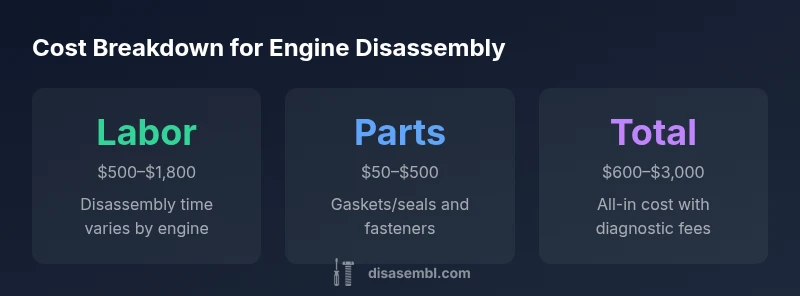
Engine disassembly costs vary widely by engine type, access, and service level. Labor typically drives the price, with ranges often cited between roughly $500 and $2,000, plus parts, diagnostics, and fees. This guide explains the factors, realistic ranges, and budgeting tips to avoid surprises.
Why engine disassembly cost varies and what buyers should expect
Disassembly projects differ dramatically depending on engine layout, accessibility, and the scope of work. According to Disasembl, even seemingly straightforward jobs can balloon if components are seized, threads are damaged, or a full teardown is required for reassembly. The initial estimate typically separates labor from parts and diagnostic fees, and it’s common for shops to adjust quotes after an on-site inspection. Engine design plays a big role: engines with tighter clearances, variable valve timing, or turbocharging usually demand more time and specialized tools. Regional labor markets also influence price, with metro areas tending to be more expensive. Finally, the shop’s policy on reassembly or rebuild work can shift the total cost substantially, especially if a full rebuild is recommended later in the project.
Keep in mind that the price you see upfront is rarely the final amount. Unexpected findings—corroded fasteners, missing bolts, or damaged gaskets—can add days to the job and push costs higher. A transparent quote that itemizes labor hours, parts, diagnostic steps, and contingency allowances is essential to avoid sticker shock later on.
What’s typically included in a disassembly quote
A thorough quote should itemize labor hours, hourly rate, estimated teardown depth, inspection, and any required testing. It should also list parts the shop expects to replace (gaskets, seals, bolts) and any consumables. Include shop fees, disposal charges, and a contingency for unplanned findings. Having this level of detail reduces surprises later. When you read the quote, look for a clear distinction between teardown only and follow-on rebuild or reassembly costs. If the shop isn’t transparent about diagnostic steps or testing, ask for a revised line-by-line estimate. A good quote also states the assumed engine condition at the start and notes any assumptions about fluids, contamination, or seized components.
In practice, you’ll often see a two-stage process: (1) teardown with inspection, (2) post-inspection quote for any reassembly or rebuild work. This approach helps you separate immediate disassembly costs from future investments in parts or machine work.
Labor costs: how rates are set and practical examples
Labor is usually the largest portion of the price. Shops set hourly rates that reflect regional demand, technician skill, and equipment. Higher-cost regions and specialty shops command top rates, while independent or shop-rate economies may offer lower pricing. The actual time to disassemble a modern engine varies widely: some engines can be torn down in a few hours, while others with tight spaces, advanced lubrication systems, or twin overhead cam layouts take longer. Anticipate potential surcharges for labor-intensive tasks such as removing accessories, wiring harnesses, or timing chains. When you receive quotes, compare the estimated hours rather than the total price alone, since hourly rates can differ substantially between shops.
Parts and consumables: what to budget beyond labor
Even if major components aren’t replaced, disassembly almost always triggers the need for new gaskets, seals, and fasteners. Gaskets and valve cover seals can be a significant line item, especially for engines with multiple banks or turbos. Bolts and studs may require replacement if threads are damaged or if the factory torque sequence cannot be guaranteed. The cost for these parts is highly engine-dependent: some engines use common gasket sets, while others require rare or OEM-specific parts. Also factor in consumables like sealants, lubricants, and cleaners. A reasonable rule of thumb is to budget a few hundred dollars for parts, with larger engine or rebuild projects pushing the parts bill higher.
Regional variations and engine type impact
Cost differences arise from engine configuration (inline-4 vs V6 vs V8), number of accessory components, and access to the timing belt or chain. Diesel engines and high-performance variants often require more intricate teardown and stricter torque checks, increasing both time and labor costs. Older engines might demand more time due to seized fasteners or degraded components, while newer engines with modular intake manifolds can complicate disassembly. Regional wage differences also play a role: shops in metropolitan areas or near automotive hubs tend to charge higher hourly rates. When budgeting, consider the engine’s complexity, accessibility, and the likelihood of needing specialty tools or service procedures.
DIY vs professional disassembly: risk and cost considerations
DIY disassembly can reduce labor costs but increases the risk of damaging components, voiding warranties, or creating safety hazards if the work is not performed to spec. Improper reassembly can lead to leaks, mechanical failure, or costly recalls. Professionals bring torque specs, timing alignment, and factory service manuals to the table, along with safety practices and the proper tools. If you’re considering a DIY approach, weigh the potential savings against the cost of mistakes, tool investments, and the time required to learn and perform the job correctly. For most engines, especially newer or high-performance models, professional disassembly remains the safer and more reliable route.
How to get an accurate estimate: quotes, inspection, and pre-work prep
To obtain an accurate estimate, start with a clear scope: disassembly only, inspection, and a separate rebuild quote if needed. Arrange on-site or video inspections when possible, so technicians can assess corrosion, seized components, and access challenges. Bring any relevant service history, including prior repairs, torque sequences, and factory manuals if available. Request a written, itemized quote that includes labor hours, hourly rate, parts, diagnostics, and contingency. Don’t hesitate to ask for a pre-work checklist and a post-disassembly plan to ensure you’re budgeting for the full project. Finally, compare multiple quotes from reputable shops and verify their credentials and warranty policies.
Measuring cost over time: maintenance, repairs, and reassembly considerations
Engine disassembly cost is often a prelude to future maintenance or a rebuild. If you’re planning to replace components or perform a rebuild, factor in the long-term costs of quality parts, machining, and potential reassembly labor. Maintenance history and drive conditions influence how soon you’ll encounter wear or failure, which in turn affects the likelihood of needing additional disassembly work down the line. A proactive approach—addressing known issues early and preserving engine health—can reduce the probability of costly emergency dismantles. Over the life of the vehicle, budget will fluctuate with mileage, driving style, and the engine’s age.
Structured breakdown of typical engine disassembly costs
| Cost Component | Low Range | High Range | Notes |
|---|---|---|---|
| Labor (disassembly) | 200 | 1800 | Depends on engine complexity |
| Parts/Consumables | 50 | 500 | Gaskets, seals, fasteners |
| Diagnostic/Inspection | 50 | 150 | Pre/post-teardown checks |
| Shop Fees/Tax | 30 | 150 | Regional variation |
Got Questions?
What costs are included in engine disassembly?
A typical disassembly quote includes labor hours at the shop’s rate, the teardown depth, diagnostic checks, and any required parts or consumables. Some quotes also list disposal fees and contingency for unexpected findings. Ensure the estimate is line-itemed for easy comparison.
Look for a line-by-line quote that lists labor, parts, diagnostics, and a contingency for surprises.
Can I save money by doing it myself?
DIY teardown can reduce labor costs but carries safety and accuracy risks. If you lack experience, you may incur costly mistakes that require professional reassembly or machining. Weigh the potential savings against the cost of tools and the time needed to perform the work correctly.
DIY might save money but risks big mistakes; consider your tools, space, and experience.
Is it worth paying more for a premium shop?
Premium shops often provide tighter diagnostic processes, documented torque specs, and better post-work testing. If your engine is complex or under warranty, the extra cost can translate into safer operation and fewer future failures. Get clear warranties and scope of work in writing.
For complex engines, a premium shop can offer safer, better-documented service.
How do I get an accurate quote?
Prepare detailed vehicle history, service records, and any known issues. Request a pre-work inspection, an itemized quote, and a separate rebuild quote if needed. Compare multiple quotes and verify credentials and warranty terms.
Get multiple, itemized quotes and verify warranties before proceeding.
Do costs differ between gas and diesel engines?
Diesel engines and turbocharged setups typically require more time, parts, and specialized tools, leading to higher costs. Gas engines are usually simpler to disassemble, but variability remains based on design and access.
Diesel and turbocharged engines usually cost more due to complexity.
“Disassembly costs reflect the engine’s design, access challenges, and the shop’s labor rate; careful planning helps avoid surprises. Always request a written estimate before work begins.”
What to Remember
- Obtain multiple quotes from reputable shops.
- Expect labor, parts, and diagnostics to contribute to total cost.
- Engine complexity and access areas drive price variance.
- DIY teardown may save money but increases risk and time.
- Budget more than the labor estimate to cover unforeseen issues.