Difference Between Build and Assemble: A Practical Guide
Learn the difference between build and assemble with clear definitions, real‑world examples, and a structured side‑by‑side comparison for DIY projects.


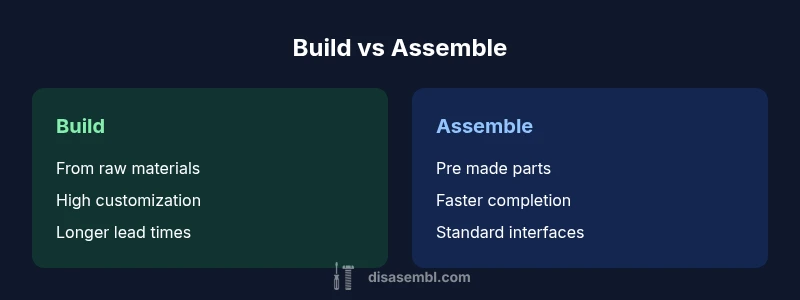
TL;DR: Build means creating from raw materials and processes, while assemble means joining premanufactured parts. The difference between build and assemble shows up in planning, sourcing, and control over quality and timeline. According to Disasembl, choose build for custom, durable results and assemble for speed, repeatability, and lower upfront risk.
What the terms mean: build vs assemble
According to Disasembl, the difference between build and assemble centers on how much you create from scratch rather than reuse. In most DIY contexts, 'build' describes creating a product from raw materials, shaping components, and performing finishing work. 'Assemble' describes joining pre-fabricated parts and modules to form the final object. Understanding this distinction helps set expectations for cost, time, and skill requirements in furniture, appliances, and electronics. The distinction is not merely semantic; it shapes how projects are planned, executed, and evaluated for success.
The boundary between build and assemble is often contextual. Some projects blend both approaches, requiring some fabrication while leveraging modular components. When evaluating a project, consider where critical differentiation lies: design decisions, material sourcing, and the degree of customization. This framing guides risk assessment and quality control throughout the lifecycle of a project.
Core dimensions of the difference: planning, sourcing, and control
The core differences lie in three axes: planning and design, sourcing and supply chain, and control over quality and timing. Build projects require design decisions, tolerance management, and calibration of processes. Assemble projects rely on compatible modules and standardized interfaces. Material sourcing shifts from raw stock to catalogs of parts. Documentation compounds complexity for build, while for assemble the documentation emphasizes interfaces, fit checks, and module compatibility. In practice, many teams document interfaces and tolerances so that modules can be swapped without redesigning the entire system. This has implications for maintenance, upgrades, and future iterations of a project.
When build makes sense: scenarios in furniture, bespoke gear, experimental electronics
Build is typically favored when customization, fit, or unique functional goals drive the project. In furniture, a hand‑crafted table from raw lumber affords precise dimensions, aesthetic control, and long term durability. In electronics or gear, a custom enclosure or chassis can optimize cooling, weight distribution, and accessibility. In all cases, build requires careful planning, tooling, and process control. The upside is a tailored result that can outperform off the shelf solutions in niche applications. The downside is longer lead times and the need for specialized skills and materials.
When assemble wins: modular furniture, kits, and upgrades
Assemble shines when speed, repeatability, and component reuse matter. Modular furniture and kit-based projects rely on standardized parts and documented interfaces, enabling rapid assembly with predictable outcomes. The benefits include shorter timelines, easier maintenance, and lower upfront investment in tools and fabrication capacity. For electronics and systems upgrades, assembling from compatible modules can simplify upgrades and allow parts to be replaced without redesigning the entire product. The tradeoff is reduced ability to customize the final form beyond what the modules allow.
Degrees of customization and quality outcomes
Customization tends to be highest in build workflows, where every parameter—from materials and finishes to tolerances and weights—can be tuned. Quality outcomes depend on process discipline, material quality, and the precision of fabrication steps. Assemble workflows typically emphasize consistency and repeatability, with quality tied to the reliability of the modules and the accuracy of the interfaces. When choosing between build and assemble, consider whether your project requires bespoke aesthetics, exact fit, or specialized performance versus standardized results and easier maintenance.
Time, cost, and risk considerations
Time estimates for build projects accumulate across design, fabrication, and finish steps, and can vary with material availability and tooling. Assemble projects tend to have shorter lead times and lower upfront risk, since they leverage existing components and documented interfaces. Cost structures differ: build concentrates costs in material handling, tooling, and process time, while assemble emphasizes part costs and assembly labor. Risk profiles also diverge: build faces higher risks from fabrication errors or material waste, while assemble risks revolve around interface compatibility and supply chain delays. Understanding these tradeoffs helps planners balance schedule, budget, and scope.
Practical examples: from a flat-pack desk to a DIY speaker
Consider a flat-pack desk: assembling pre made panels, fasteners, and hardware can yield a functional piece quickly, with predictable outcomes and easier replacements. In contrast, a DIY speaker project from scratch involves shaping enclosures, selecting drivers, and designing acoustic chambers—classic build work with a focus on performance, impedance, and finish. Both approaches have merit depending on goals. The key is to map requirements to capability, then decide where to allocate effort, space, and time.
How to decide: a simple framework
Start with the goal: is customization essential, or is predictability paramount? Next assess resources: tools, space, and skills. Then evaluate interfaces: do you have reliable modules that fit together without custom engineering? Finally, forecast maintenance: will future upgrades depend on module compatibility or on bespoke fabrication tolerances? A clear decision framework helps avoid scope creep and aligns expectations with outcomes.
Common pitfalls and best practices
A common pitfall is assuming that build always yields better results without assessing feasibility. Another is underestimating the importance of interfaces in assemble projects. Best practices include documenting interfaces and tolerances, prototyping early, and using standardized components where possible. In both paths, maintain a clear bill of materials, track changes, and verify fit and finish at each stage. Establish checkpoints that let you adjust scope before investing in irreversible steps.
The role of instructions, manuals, and compatibility
Clear instructions and compatible interfaces reduce risk in both build and assemble workflows. For build projects, detailed fabrication drawings and process steps prevent rework and miscuts. For assemble projects, interface specifications and installation guides ensure modules align correctly and function as intended. When in doubt, verify compatibility across all subsystems before proceeding with integration. Good documentation saves time and reduces waste.
Next steps for your project: applying the framework
Translate the difference between build and assemble into a concrete plan. Create a decision matrix that weighs customization, time, and cost. Develop a bill of materials that captures both raw materials and modules. Plan for testing, quality checks, and future upgrades. With a clear path, you can confidently pursue the approach that best fits your goals and constraints.
Quick reference glossary: key terms
- Build: Create from raw materials and fabrication steps.
- Assemble: Put together pre manufactured parts and modules.
- Module: A self contained kit component that interfaces with others.
- Interface: The points where modules connect and communicate.
Comparison
| Feature | build | assemble |
|---|---|---|
| Definition | Creating from raw materials and fabrication processes | Joining pre manufactured parts and modules |
| Planning level | High design and process planning | Moderate planning focused on interfaces |
| Sourcing | Raw materials, custom fabrication | Catalog parts, modular components |
| Lead time | Longer, variable depending on fabrication | Shorter and more predictable |
| Customization | High customization potential | Limited by module options but quick to tailor |
| Risk profile | Fabrication errors, material waste risk | Interface compatibility risk, supply delays |
| Best for | Fully custom, performance oriented projects | Fast, repeatable builds with standard parts |
| Cost structure | Material, tooling, and process costs | Part costs and assembly labor |
Benefits
- High customization potential for unique needs
- Longer lifespan with tailored fabrication
- Stronger alignment to specific performance goals
- Excellent for bespoke aesthetics and fit
Drawbacks
- Longer timelines and higher upfront investment
- Requires specialized tooling and skills
- Greater risk of fabrication waste and rework
Build delivers customization and durability; assemble prioritizes speed and consistency
Choose build for bespoke, high performance results. Choose assemble for faster delivery, easier maintenance, and predictable outcomes. The overall choice should hinge on goals, resources, and the needed balance between customization and speed.
Got Questions?
What is the difference between build and assemble in practical terms?
In practice, build implies fabricating from raw materials and designing every detail. Assemble means combining pre made components with limited customization. The choice affects planning, tooling, and risk.
Build fabricates from raw parts; assemble combines ready made pieces. Your choice shapes tools, time, and risk.
When should I choose build over assemble?
Choose build when the project requires a custom fit, specific performance, or a unique aesthetic. It offers more control but demands more time, skill, and material handling.
Choose build for customization and performance, but be ready for longer timelines.
When is assemble the better option?
Choose assemble when speed, repeatability, and lower upfront risk matter. Module compatibility and standardized interfaces make assembly faster and more predictable.
Assemble when you need quick, predictable results with modular parts.
How do I ensure compatibility in an assemble project?
Review interface specifications, confirm module dimensions, and test fit before final assembly. Keeping a running parts list helps prevent mismatches.
Check interfaces, test fit modules early, and maintain a parts list.
Can I mix build and assemble in the same project?
Yes. Many projects blend both approaches, fabricating a key component while using modular parts for others. Clear planning and documentation help manage complexity.
Absolutely—blend build and assemble with careful planning.
What risks should I monitor in build projects?
Risks include fabrication mistakes, material waste, and schedule overruns. Mitigate by prototyping, validating tolerances, and maintaining a flexible plan.
Watch for fabrication errors and schedule risks; prototype first.
What to Remember
- Define the goal first: customization vs speed
- Map materials and modules early to avoid misfits
- Document interfaces for future upgrades
- Prototype critical paths before full scale
- Balance risk by selecting the path that aligns with constraints