Difference Between Repair and Maintenance: A DIY Guide
Learn the key distinctions between repair and maintenance with practical steps and checklists to prevent breakdowns and extend home equipment life and efficiency.


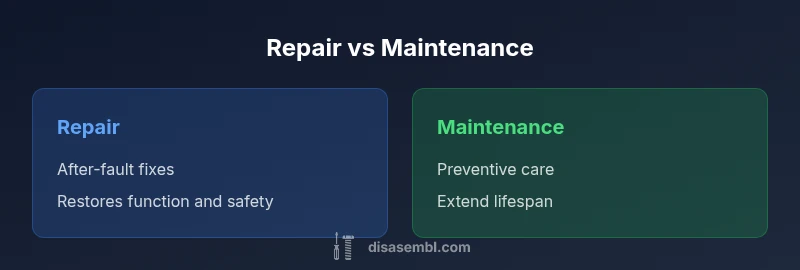
The difference between repair and maintenance centers on purpose and timing. Repair fixes a fault after it occurs, restoring function or safety. Maintenance proactively prevents failures through routine care. Understanding this distinction helps you plan budgets, extend appliance lifespans, and avoid unnecessary repairs. In short, maintenance reduces failures; repair restores function when something breaks.
Understanding the Difference Between Repair and Maintenance
The difference between repair and maintenance is more than terminology; it shapes how you approach every household task. In practical terms, a repair fixes a fault after it occurs, restoring function or safety. A maintenance task is performed on a schedule to prevent failures before they manifest. For DIY homeowners, this distinction clarifies what you should do now, what to schedule, and what to budget for. According to Disasembl, recognizing this distinction helps you prioritize tasks, set realistic timelines, and avoid unnecessary downtime. Consider a dresser drawer that sticks: a maintenance approach might lubricate the runners to prevent sticking, while a repair would fix a warped drawer face if it stops opening smoothly. By categorizing work as preventive or corrective, you align your tools, skill level, and downtime with reality.
Why the Distinction Matters for DIY Projects
Understanding the big difference between repair and maintenance matters most when you plan a DIY project. Maintenance tasks are typically predictable, repeatable, and less dramatic, letting you schedule work on evenings or weekends. Repairs tend to be episodic, urgent, and potentially more costly, especially if a minor fault compounds into bigger problems. For homeowners, this distinction affects budgeting, risk management, and warranty compliance. Disasembl emphasizes that framing tasks as preventative maintenance or corrective repair creates a clearer path: you know which steps to take first, which parts to have on hand, and how to communicate timelines to family members. The practical payoff is reduced downtime and longer-lasting assets.
When to Repair vs When to Maintain
Knowing when to repair versus when to maintain comes down to symptoms, age, and cost. If a component shows recurring wear but still functions, maintenance can slow deterioration and catch early signs. If a fault persists after basic fixes or safety is compromised, plan a repair or a replacement. In electronics, a persistent warning light suggests diagnostic work that could lead to repair; for plumbing, frequent leaks signal maintenance opportunities or urgent intervention. A structured approach helps you decide quickly and avoid wasted effort. Disasembl notes that many tasks are best handled with a mixed strategy: maintain regularly to delay repairs, and perform repairs when failure is confirmed.
Common Definitions in Household Contexts
Repair is the process of restoring a device or structure to its original working state after failure, damage, or wear. Maintenance refers to routine care performed to prevent failures, extend life, and keep systems operating smoothly. Both activities require planning, tools, and safe work practices, but they differ in timing, objective, and risk. For homeowners, a solid working definition helps you develop repeatable routines: quarterly checks for critical items, monthly cleanings, and annual professional inspections when warranted. Clear definitions also help with warranties and service plans, ensuring you don’t void coverage through improper care.
Practical Framework: Quick Checks for Every Task
A simple framework makes the repair-versus-maintenance decision easy in practice. Start with a quick symptom check, then assess frequency and age. Examine warranty terms, available spare parts, and the potential downtime involved. If the issue is intermittent or wear is evident but performance remains acceptable, schedule maintenance. If symptoms persist after basic adjustments, document the fault, estimate repair costs, and consider replacement if costs approach or exceed the item’s value. Always assess safety implications first, prioritize non-destructive testing, and use the lowest-risk method. This framework helps you stay organized and reduce frustration during home projects.
Role of Documentation, Warranties, and Records
Keeping a simple log of maintenance tasks and repairs pays dividends over time. Note the date, task performed, parts used, and any follow-up actions. Documentation supports warranty claims, enables trend analysis, and helps you budget for future needs. Many manufacturers require regular maintenance to keep warranties valid, so follow the recommended schedules in manuals. If a professional is involved, request a written report that outlines what was serviced and what remains. A well-kept record reduces duplication of effort and makes it easier to communicate with family members or future buyers.
Tools, Costs, and Time Considerations
Understanding the cost dynamics between repair and maintenance is essential for effective home budgeting. Maintenance tasks are typically less expensive per occurrence and can be scheduled to fit your calendar, reducing emergency downtime. Repairs, especially major ones, can be costly and unpredictable. When deciding, factor in the item’s age, replacement value, and likelihood of recurring failures. The key is choosing a strategy that minimizes total life-cycle cost. Disasembl highlights that a blend of regular maintenance and timely repairs provides the best balance between reliability and affordability.
Maintenance Strategies for Different Categories
Maintenance looks different across furniture, appliances, and electronics. For furniture, focus on joints, finishes, and fabric protection; for appliances, prioritize filters, seals, lubrication, and outlet accessibility; for electronics, dust control, airflow, and moisture protection matter most. Establish a maintenance calendar that includes seasonal checks for HVAC or water systems, plus mini-tasks like wiping down surfaces, tightening screws, and inspecting cords. By tailoring schedules to each category, you create predictable routines that prevent costly failures and extend asset lifespans. Disasembl’s guidance emphasizes practical, task-by-task planning that homeowners can implement without professional help in many cases.
Case Studies: Real-World Scenarios
Case Study 1: A kitchen cabinet hinge becomes loose. A quick maintenance task—tightening screws, applying thread-locking compound, and aligning doors—restores function and avoids a repair that would require replacement parts. Case Study 2: An old washing machine begins to emit unusual noises. A structured approach identifies worn drum bearings. If replacement bearings are affordable, a repair could extend life; if not, a replacement with a model offering similar capacity might be wiser. Case Study 3: A wood table develops small cracks in the top surface. Regular sealing and refinishing act as preventive maintenance, delaying more extensive repairs and preserving value.
The Bottom Line for DIYers
The difference between repair and maintenance is a guiding principle for every home project. By separating preventive tasks from reactive fixes, you can plan more accurately, save time, and extend the life of assets. The Disasembl team recommends building a simple, repeatable routine that fits your schedule, budget, and comfort level. With practice, distinguishing maintenance from repair becomes instinctive, turning everyday chores into reliable, low-frustration routines.
Comparison
| Feature | Repair | Maintenance |
|---|---|---|
| Primary goal | Restore function after a fault | Preventive care to reduce failures |
| Timing | After failure occurs | On a preventive schedule |
| Typical tasks | Diagnostics, part replacement, or realignment | Cleaning, lubrication, tightening, and inspection |
| Impact on lifespan | Can extend life after correcting fault | Reduces wear and delays deterioration |
| Cost pattern | Occasional high-cost repairs | Lower, more predictable ongoing costs |
| Best for | When safety or function is compromised | When reliability and uptime are priorities |
Benefits
- Clarifies planning and budgeting for home projects
- Reduces unexpected downtime through proactive care
- Extends asset lifespan with routine attention
- Supports safer operation by addressing wear early
Drawbacks
- Maintenance may seem time-consuming
- Repair can be costly if issues escalate
- Over-maintenance can waste resources
Maintenance should be the default approach, with repairs reserved for confirmed faults
A proactive maintenance mindset minimizes downtime and extends asset life. Reserve repairs for genuine faults or safety concerns.
Got Questions?
What is the difference between repair and maintenance?
Repair fixes a fault after it occurs, restoring function or safety. Maintenance is proactive care performed on a schedule to prevent failures.
Repair fixes faults after they occur; maintenance prevents failures with routine care.
Can maintenance prevent all repairs?
Maintenance reduces the likelihood of failures but cannot prevent every possible breakdown. It lowers risk by addressing wear early and scheduling inspections.
Maintenance reduces risk, but some failures are inevitable. Regular checks still matter.
How do I decide whether to repair or replace?
Assess repair costs relative to replacement, item age, and warranty coverage. If multiple major components fail or costs approach replacement, replacement becomes wiser.
If repairs exceed replacement value or the item is old, consider replacing.
Are maintenance tasks different for furniture, appliances, and electronics?
Yes. Furniture maintenance focuses on joints and finishes; appliances on seals and filters; electronics on dust control and moisture protection.
Maintenance varies by item type; follow manuals and practical guides.
Should I DIY maintenance or hire a professional?
Many maintenance tasks are suitable for DIY, especially simple cleaning. Complex repairs or safety-critical work should involve a professional.
DIY for simple care; hire a pro for complex repairs or safety concerns.
How do warranties affect maintenance decisions?
Warranties often require regular maintenance to stay valid. Document tasks and use qualified technicians to protect coverage.
Warranties may require maintenance; follow guidelines to protect coverage.
What to Remember
- Prioritize preventative maintenance to reduce downtime
- Schedule regular checks for critical systems
- Differentiate tasks by goal: prevent vs fix
- Keep records to improve planning
- Understand warranties to align with repair needs