Is It Okay to Mount a TV Above a Fireplace? Practical Guide
Learn whether mounting a TV above a fireplace is safe, with heat considerations, clearance guidelines, and step-by-step mounting tips from Disasembl for DIY enthusiasts.


Is it ok to mount a TV above a fireplace? In many homes, yes, but you must check heat exposure, clearances, and mounting specs. If the mantel or chimney generates sustained heat or smoke, consider alternative locations. Always follow the TV manufacturer’s weight limits, use appropriate wall anchors and studs, and ensure cables are safely routed and ventilated.
is it ok to mount a tv above a fireplace
According to Disasembl, mounting a TV above a fireplace is a common setup for living rooms and home theaters, but it requires careful assessment of heat sources, clearances, and wall integrity. The question is not simply about aesthetics; it is about long-term reliability and safety. If your mantel or surround conducts heat or if the fireplace produces radiant warmth during typical use, the risk to electronics increases. Before proceeding, verify that the location maintains a reasonable thermal profile and that the wall can support the TV’s weight without cracking or warping. This is especially important for larger screens where weight and mounting leverage are greater. The Disasembl team emphasizes planning first, then verifying with a simple test: observe the wall area for a week of typical use, noting any warm spots on the surface or discoloration around the mounting zone. When heat is sporadic and low, mounting can be safe with the right hardware and clearances. If in doubt, consult a professional for a quick assessment and avoid irreversible changes.
Heat sources and how they affect your TV
Heat is the most critical factor when mounting above a fireplace. Radiant heat and convection can gradually degrade adhesive components, reduce screen lifespan, or alter calibrated brightness. While many TV manufacturers specify operating temperatures and mounting clearances, these guidelines can vary by model and wall type. Disasembl analysis shows that even brief exposure to elevated surface temperatures can cause subtle panel stress over years of use. The best approach is to maintain a buffer between the TV and any heat source, using a heat shield or a properly rated mounting system that distances the television from the wall. For masonry fireplaces, heat can transfer through chimney bricks and studs, so a backer board or insulated spacer may be prudent. Always check the fireplace’s typical heat cycle and consider how often the area becomes warm during use. In rooms with active, hot flames or forced-air draft, consider moving the TV to a side wall or above a cautionary height rather than directly over the fire.
Best mounting options and hardware
Choosing the right mount is essential for safety and adjustability. Fixed mounts offer a clean, low-profile look but provide no tilt or swivel, which can be a problem if glare is an issue or if you need a slight downward angle for viewing from a couch. Tilt mounts reduce glare and improve heat exposure management by allowing the screen to angle away from the wall. Full-motion mounts provide the most flexibility but require robust anchoring to withstand the movement and weight of the TV. Always use a mount that matches the TV’s VESA pattern and weight rating, and install it on solid wall studs rather than drywall alone. If the wall is masonry, specialty anchors and longer fasteners are necessary. The shielded path for power and HDMI cables should avoid proximity to heat pathways, and you may need a low-profile cord management kit to keep cables neatly tucked away. In all cases, verify that the mounting hardware has heat ratings compatible with the wall type and fireplace environment, and follow the manufacturer’s installation instructions to the letter.
Safety measures and professional considerations
Safety should guide every step of a mounting project above a fireplace. Start with a clear line of sight to the TV’s center from your primary seating area, and ensure the mounting height aligns with ergonomic viewing standards. If you notice cracking, bowing, or significant wall movement when drilling, pause and reassess. Use a stud finder to locate sturdy framing, and never anchor into drywall alone. When in doubt about heat exposure or structural integrity, contact a licensed contractor or a fireplace specialist. Electrical safety matters too: plan for cord routing that keeps cables away from heat and flame risk, and consider dedicated outlets or in-wall power solutions that comply with local electrical codes. Remember to keep children and pets away from the work zone, wear eye protection, and turn off power at the breaker before connecting any cables.
Cable management and ventilation considerations
A clean, safe cable setup reduces the risk of heat buildup and accidental disconnections. Use appropriate in-wall rated cables if you plan to run power or HDMI through walls, and avoid overloading outlets near the fireplace. Cable management kits can help hide wires behind the TV and along the wall without creating tripping hazards. Ventilation is essential: ensure there is enough space around the TV for air to circulate and that heat cannot be trapped between the TV and the mantel. If your fireplace operates with a strong airflow or uses a fan-assisted burn, consider additional airflow pathways around the unit. For most households, locating the TV on the mantel side or on a wall a few inches away can balance viewing comfort with safety. If heat sources are intermittent, a staggered watching schedule and periodic visual inspections will help detect early signs of thermal stress on the screen.
Authority sources and further reading
For general safety guidance related to electrical and heat safety around wall-mounted electronics, consult established sources such as OSHA and NFPA. Articles and guidelines from these organizations offer non-model-specific safety practices that support responsible mounting decisions. Additionally, review credible consumer guidance on home theater setup and mounting best practices from major publications. By cross-referencing reputable safety resources with your TV’s installation manual, you can develop a plan that minimizes risk while preserving a clean, ergonomic viewing experience.
Is there a safer alternative if the heat risk is high?
If heat risk is deemed unacceptable after evaluation, consider relocating the TV to a wall that is not directly above a heat source, or install a heat shield and move the mantel to reduce radiant heat exposure. You might also opt for a recessed or floating-mount solution that places the TV higher up on a separate wall or in a corner with better ventilation. Another option is to install a tempered-glass panel and insulating spacers to minimize heat transfer, though this adds cost and requires precise workmanship. In all cases, ensure that the wall structure remains intact and that electrical wiring complies with local codes.
Tools & Materials
- Stud finder(Locate sturdy framing behind drywall.)
- Drill with assorted bits(Select bits for wood or masonry depending on wall type.)
- Level and pencil(Mark plumb lines and horizontal alignment.)
- TV wall mount kit (VESA pattern compatible)(Must support the TV weight and size.)
- Appropriate fasteners (lag screws or masonry anchors)(Choose length to reach wall studs or anchors.)
- Heat shield or spacer kit (optional)(Reduces heat transfer to the TV.)
- Cable management kit(Keeps wires neat and away from heat path.)
- Safety glasses and gloves(Personal protection during drilling and mounting.)
Steps
Estimated time: 60-90 minutes
- 1
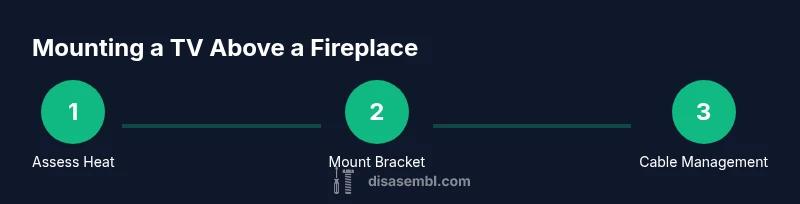
Assess heat profile and mounting height
Evaluate the mantel and fireplace area for radiant heat exposure. Measure couch-to-TV viewing distance and determine a comfortable mounting height that minimizes glare and neck strain. Confirm that the chosen wall location can bear the TV’s weight and that future furniture placement won’t obstruct access to the mount.
Tip: Record measurements and visualize seating before drilling any holes. - 2
Locate studs and mark mounting location
Use a stud finder to identify vertical studs in the chosen wall region. Mark the center of each stud and draw level reference lines to ensure the mount will be perfectly horizontal. Avoid drilling into electrical boxes, pipes, or concealed spaces.
Tip: Drill test holes at low depth to verify stud location before full anchors. - 3
Attach mounting plate to wall
Pre-drill pilot holes and secure the mounting plate to studs with the appropriate lag screws. Ensure the plate sits flush against the wall, with leveling checked from multiple angles. If using masonry, insert compatible anchors and longer screws.
Tip: Use a friend to hold the plate during initial tightening to prevent misalignment. - 4
Route cables and prepare power solution
Plan cable paths to avoid heat zones. Use in-wall rated cables or a power relocation kit as required by local codes. Keep power cords away from flame paths and ensure outlets are GFCI-protected if near a fireplace.
Tip: Label cables for future service and testing. - 5
Mount TV to the bracket and connect
Hang the TV on the mounted bracket according to the VESA pattern. Secure all locking screws, verify hooks engage, and double-check the tilt range if you’re using a tilt mount. Connect HDMI/AV cables and test the display without applying full power.
Tip: Have a second person assist to avoid dropping the TV. - 6
Test, adjust, and finalize setup
Power on the TV and check alignment, tilt, and glare. Make minor adjustments to viewing angle and ensure clearances from the mantel and heat paths. Secure all cables, hide wires, and perform a final safety check around the mounting area.
Tip: Keep a maintenance window for future rechecks after seasonal fireplace use.
Got Questions?
Is it safe to mount a TV directly above a fireplace?
It's potentially safe if heat exposure is minimal and proper clearances are maintained. Use a heat shield or alternative mounting location if heat is sustained. Always follow the TV manufacturer's guidance and local electrical codes.
Mounting above a fireplace can be safe with proper clearances and heat control, but check manufacturer guidance and local codes.
What clearance should I maintain between the TV and the fireplace?
Follow the TV's mounting guidelines and ensure a buffer between the screen and any heat source. If the fireplace produces significant radiant heat, consider moving the TV to a different wall or adding heat shielding.
Keep a buffer between the TV and heat source, and follow the manufacturer’s guidelines.
Can I use drywall anchors if I don’t have studs nearby?
Drywall anchors are less reliable for heavy TVs above a fireplace. Prefer mounting into studs or using masonry anchors rated for the wall type. When in doubt, hire a professional.
Avoid drywall anchors for heavy TVs; use studs or proper masonry anchors.
What signs indicate heat damage after mounting?
Look for warping, discoloration, or tempered glass issues and any changing brightness. If you notice warmth beyond normal, shut down and re-evaluate the setup.
Watch for unusual warmth or physical changes in the wall or TV.
Should I consult a professional or DIY this?
If you’re confident with power routing, wall structure, and mounting hardware, DIY is feasible. When in doubt about heat, structure, or local codes, consult a licensed professional.
Do it yourself if you’re comfortable with the steps; otherwise, hire a pro.
Watch Video
What to Remember
- Assess heat exposure and clearances before mounting.
- Choose a mount that matches TV size and weight, and locate sturdy framing.
- Plan cable routing with safety and code compliance in mind.
- Use professional help if heat risk or wall structure is uncertain.
- Disasembl recommends prioritizing safety and proper ventilation.