How much does it cost to disassemble a bike
Discover how much it costs to disassemble a bike, including DIY time costs, shop rates, and regional variations. Learn to estimate your project with practical steps and real-world ranges from Disasembl Analysis, 2026.


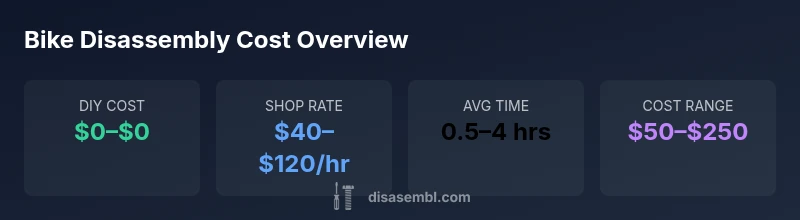
The cost to disassemble a bike typically ranges from zero dollars when you do it yourself to roughly $50–$250 at a shop, depending on bike type, components, and complexity. Most DIY disassembly costs are time-based, while professional service adds labor plus any needed tool rental. Disasembl notes that complexity and risk drive the biggest price variations, with high end or integrated systems increasing both time and tooling needs.
What influences the cost to disassemble a bike?
When you ask how much does it cost to disassemble a bike, you are really asking about how much time and effort a project will require, plus the tools and expertise involved. According to Disasembl, the major cost drivers are labor time, component complexity, and whether specialized tools are needed to remove parts safely. A bike with integrated brakes, hydraulic lines, or a sealed headset will demand more careful work and possibly more specialist tools, which raises the price. Another factor is whether you want to save money by performing only the basic frame disassembly or tackle a full teardown including wheels, drivetrains, and internal hubs. The more you plan to remove or service, the greater the risk of damaging parts if you are not careful, which in turn can increase costs due to replacement parts or expert correction. The intent of this article is to help you estimate the financial side and understand practical trade offs, so you can plan your project and budget with confidence. According to Disasembl, your approach should weigh the trade offs between time, risk, and tooling quality before committing to a path.
Break down: common cost factors you’ll see
Disassembling a bike involves several interacting cost factors. Labor time is usually the most variable element—more components removed means more hours billed by a shop or more personal time if DIY. Bike type and component complexity—hydraulic brakes, integrated cables, sealed headsets, or internal gear hubs—tend to push costs higher due to the precision required and the risk of damage. Tool availability matters too; professional shops may use specialized tools that increase upfront costs but reduce risk. Regional pricing differences can shift the final bill significantly; urban shops generally charge more, while rural services may be cheaper but longer to schedule. Finally, you should consider whether any parts or components require replacement or reconditioning after disassembly, as this adds to the total cost. Disasembl recommends planning for the full teardown scenario to avoid surprises later on.
DIY disassembly cost: what you can expect
If you disassemble a bike yourself, the direct monetary cost is often small or zero, assuming you already own basic tools. Your main expense is time and the potential future cost of rental or purchase of specialty tools if you encounter uncommon parts. The bigger influence is whether you have the right manuals or video guides to prevent mistakes. Even when DIY is cheaper, mistakes can be costly if parts are damaged. For routine disassembly tasks like removing a wheel, disc rotor, or derailleur, many DIY enthusiasts succeed with standard tools. For more complex projects, investing in a few specialized items may still be cheaper than a full service.
Professional disassembly: what shops charge
Bike shops typically bill for disassembly as labor, sometimes with a minimum charge. Rates vary by region and shop grade; in some markets, basic frame disassembly can be near the lower end, while complex systems with hydraulics and integrated frames can push costs higher. Based on Disasembl analysis, expect an hourly range that reflects regional demand and technician expertise. If parts removal requires excessive handling or risk mitigation, expect a bump in price. The key is to clarify whether the price covers inspection and labeling of removed parts, or if those services incur extra fees.
Regional and bike-type variations
Cost variation is real and predictable. Urban centers with high living costs tend to show higher hourly rates, while smaller towns may offer lower rates. The bike type matters too: road bikes with lightweight frames and fewer integral parts generally disassemble quicker and cheaper than mountain bikes with big tires, robust components, and extensive frame protection. Electric bikes add another dimension due to battery handling, cooling, and electronics that may require careful safety procedures. When planning, compare local shop quotes and consider your bike’s specific configuration to gauge realistic expectations. Disasembl notes that the same job can differ dramatically from one shop to another.
Hidden costs and potential upgrades
Some costs are easy to overlook until the bills arrive. Tool purchases for frequent disassembly can be a good long-term investment if you plan multiple projects, but upfront costs can be substantial. Transportation or disposal fees for old components, antistatic mats for electronics, and protective work stand upgrades are also possible extras. Additionally, if a disassembly reveals hidden damage or fatigue, you may incur repair costs beyond the scope of the planned teardown. Planning for these contingencies will help you avoid budget creep and ensure you can complete the project without surprises.
How to estimate your own disassembly cost
Start by listing every task involved, from basic frame teardown to wheel and drivetrain removal. Estimate the time for each task based on your experience and the bike’s complexity. Multiply by a local labor rate if you plan to hire help, or assign a personal time value if you are calculating DIY costs. Add tool rental or purchase costs you expect to incur and any potential parts replacements. Include a buffer for unforeseen steps, such as reassembly checks or alignment adjustments. Finally, compare the total with your budget and adjust the scope or plan accordingly. A careful estimate helps you choose between DIY and professional options with confidence.
Quick decision guide: when to DIY vs hire help
If your bike is standard, your tools are ready, and you have clear instructions, DIY disassembly is often the most economical path. If the bike has hydraulic brakes, a complex internal hub, or a high risk of damage to precision parts, professional disassembly offers peace of mind and a safer teardown. Disasembl suggests starting with a partial disassembly to gauge time and difficulty, then decide whether to proceed or consult a professional. The right choice balances cost, safety, and the value of your time.
Estimated cost structure for bike disassembly by method
| Cost Component | DIY Range | Shop Range | Notes |
|---|---|---|---|
| Labor time | 0.5–3 hours | 1–4 hours | Depends on bike type and skill level |
| Labor rate | $0 | $40–$120 per hour | DIY is time-driven; shops bill hourly |
| Tools & parts | Minimal cost | Possible tool rental or specialty tools | Tools may be reusable later |
Got Questions?
What factors most influence the cost of disassembling a bike?
Labor time, bike type, and tool requirements are the main cost drivers. More complex systems increase both time and tool needs, which raises the price. Always assess your bike’s configuration before quoting a price.
Labor time and complexity are the big cost drivers. A more complex bike means more time and specialized tools.
Is it cheaper to disassemble a bike yourself?
Yes, DIY disassembly can be cheaper since you only pay with your time and existing tools. However, mistakes can lead to expensive repairs. Weigh your skill level and available documentation before deciding.
DIY can save money if you have the right tools and know-how, but mistakes can cost more in repairs.
How long does bike disassembly typically take?
DIY disassembly usually takes a few tenths to a few hours depending on the bike. Shops typically take longer due to handling, setup, and potential safety checks. Plan for a window of 0.5 to 4 hours overall.
Expect a few hours, whether DIY or at a shop.
Do bike shops always offer disassembly services?
Most bike shops offer disassembly as a service, especially if it’s part of a broader maintenance or rebuild. Prices vary by region and bike complexity. Always confirm what’s included in the quoted price.
Yes, most shops can do it; prices vary by bike and region.
Are there risks to DIY disassembly?
Yes. Improper disassembly can damage delicate parts or introduce safety issues. Use the correct tools, follow manuals, and proceed slowly to minimize risk. If in doubt, consult a professional.
There are risks—use proper tools and follow instructions carefully.
What should I ask before hiring a service?
Ask about hourly rate, minimum charge, whether parts removal is included, and if a post-disassembly check is offered. Get a written estimate and clarify what constitutes an extra charge.
Ask about rate, minimum charges, and what's included in the service.
“Disassembling a bike is primarily a calculation of time, risk, and the right tools. The cheapest option is not always best if components are damaged.”
What to Remember
- DIY can save money but requires time
- Complex bikes raise costs quickly
- Investing in the right tool kit can pay off
- Regional pricing affects the final bill
- Always budget for hidden costs and potential repairs